How Many Lions and Leopards Are in Pilanesberg?
About 44 lions (2023 study) and roughly 35 leopards (2026 study), not the outdated 60 to 70 quoted online. Plus cheetahs, elephants and rhino, with sources.

Ask how many lions live in Pilanesberg and you'll get three different answers from three different websites: 44, 60 to 70, "about 50." The same goes for leopards, elephants and cheetahs. Most of those numbers aren't wrong, exactly. They're just old, copied from site to site long after the park changed.
This guide pulls together the best current figures we could find, says where each one comes from and how old it is, and is honest about the animals nobody has a reliable public number for. Then it explains what the numbers actually mean for your chances of a sighting, and finishes with a full Pilanesberg animal checklist you can use on your next visit.
The short answer
Lions: about 44 lions older than one year, according to the most recent published study (2023). Older figures of 60 to 70 are out of date.
Leopards: roughly 35, based on a 2026 study that estimated about 7 leopards per 100 km² using camera traps and tourist photos.
Cheetahs: a small, carefully managed population. There's no reliable recent public count.
Elephants: several hundred. The last widely quoted count (2010) was 220 to 380, and the population has grown since.
African wild dogs: reintroduced in 1999, but there hasn't been a confirmed public sighting in years, and no recent official count has been published.
Rhino: both white and black rhino live in the park, but the numbers are deliberately not published, to protect them from poachers.
Below is what's behind each number.
Why the numbers online don't agree
Pilanesberg is a fenced park of roughly 550 km², built on land that was farmland until the late 1970s. Almost every large animal in it today was brought in: Operation Genesis, starting in 1979, moved around 6,000 animals of 22 species into the park, and it's still described as one of the largest game translocations ever done.
A fence changes everything about population numbers. Animals can't disperse when a population grows, so the park has to actively manage how many of each species it holds: moving animals out, bringing new bloodlines in, and in some cases using contraception. That means Pilanesberg's numbers really do change from year to year, often on purpose. A figure from 2010 or 2015 can be badly out of date, and that's why you see so many different answers.
There's also a difference between a count and an estimate. Shy animals like leopards can't simply be counted, so researchers estimate them statistically from photos of individually recognizable animals, and the result comes with a range rather than a single exact figure.
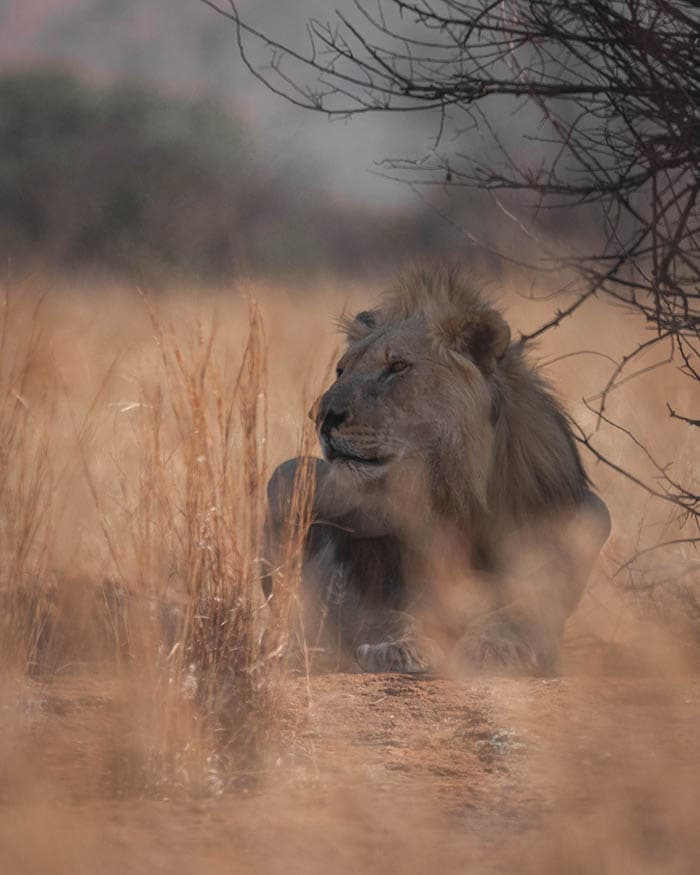
How many lions are in Pilanesberg?
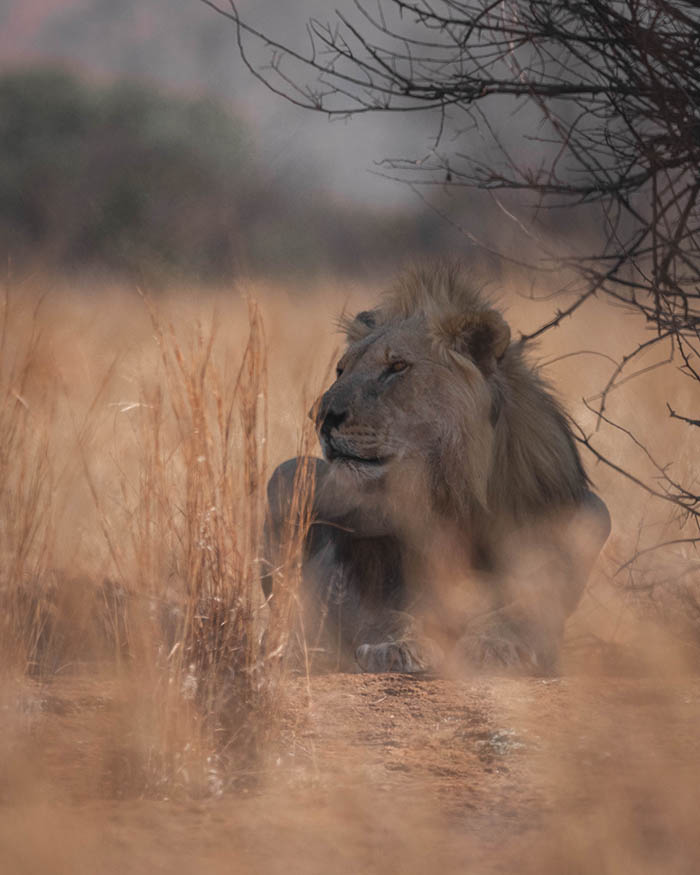
The most recent published estimate is 44 lions older than one year, with a likely range of 38 to 49. It comes from a 2023 study in Ecology and Evolution by Ball and colleagues, which identified individual lions from photographs and used a statistical method called spatial capture-recapture to estimate the population.
That's well below the 60 to 70 you'll still see quoted on many sites, and that's no accident. In a fenced park, lions can do too well: older research describes the population at times climbing well past 100, which puts pressure on prey and on other predators like cheetahs. The park reduced the lion population deliberately, and a follow-up study published in 2025 looked at how well the survey method picked up that change.
What it means for you: 44 lions in a park you can cross in about an hour is a lot of lion. Pilanesberg is one of the better places in South Africa for a self-driver to find them, especially early in the morning when they're still active and on the move. Our guide on how to spot lions on safari covers where and when to look.
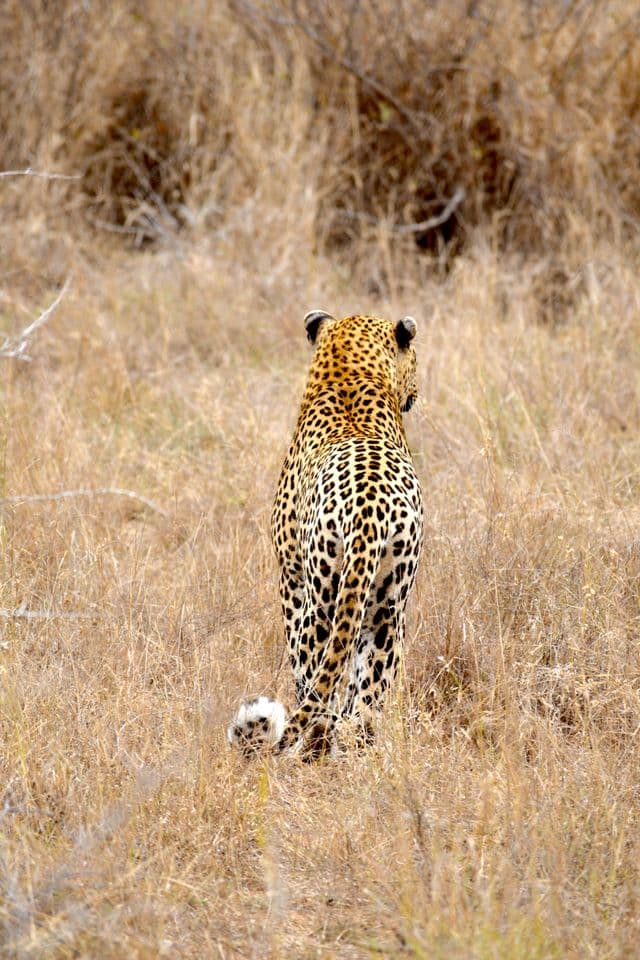
How many leopards are in Pilanesberg?
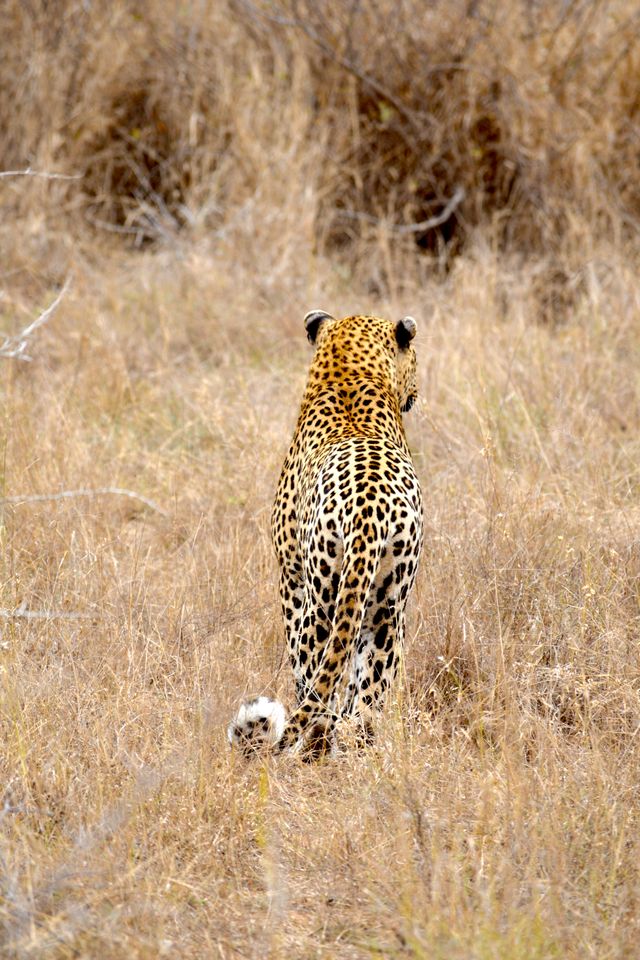
A 2026 study by Leeman and colleagues estimated about 7 leopards per 100 km² in Pilanesberg (likely range about 5.6 to 8.8). Across the roughly 495 km² the study covered, that works out to around 35 leopards, somewhere between about 28 and 44.
The way it was done is the best part. Researchers combined camera traps placed along the park's tourist roads with leopard photos that visitors had posted online. Every leopard has a unique spot pattern, so a tourist's photo can identify an individual just like a camera trap can. Adding visitors' photos made the estimate noticeably more precise and cut the cost of the survey dramatically.
In other words, the photos people take from their cars in Pilanesberg are genuinely useful to science. That's very much the idea behind opspoor, too: every sighting logged by a visitor adds to a picture that no single ranger or researcher could build alone.
What it means for you: leopards are still the hardest of the Big Five to find in Pilanesberg, as everywhere, but with 30-plus of them in a small park, your odds are better than many people assume. Read how to spot a leopard on safari before you go.
How many cheetahs are in Pilanesberg?
Nobody publishes a reliable current number, so be wary of any site that gives you an exact one. What we do know:
Pilanesberg's cheetahs are part of South Africa's national cheetah metapopulation: a network of fenced reserves that move cheetahs between them to keep the populations genetically healthy.
A well-known female called Rain was introduced in 2014 and died in 2023, aged 12. Her daughters, Tale and Mapula, carried on her line in the park.
In November 2025, two young male cheetahs were moved from Pilanesberg to Shambala Private Game Reserve, a sign that the park's cheetahs have been breeding well.
The population is small (older counts have ranged from about 7 to 12 animals), and it changes as cheetahs are moved in and out. Cheetahs are a lucky sighting in Pilanesberg; look for them on open grassland in the morning, when they hunt.
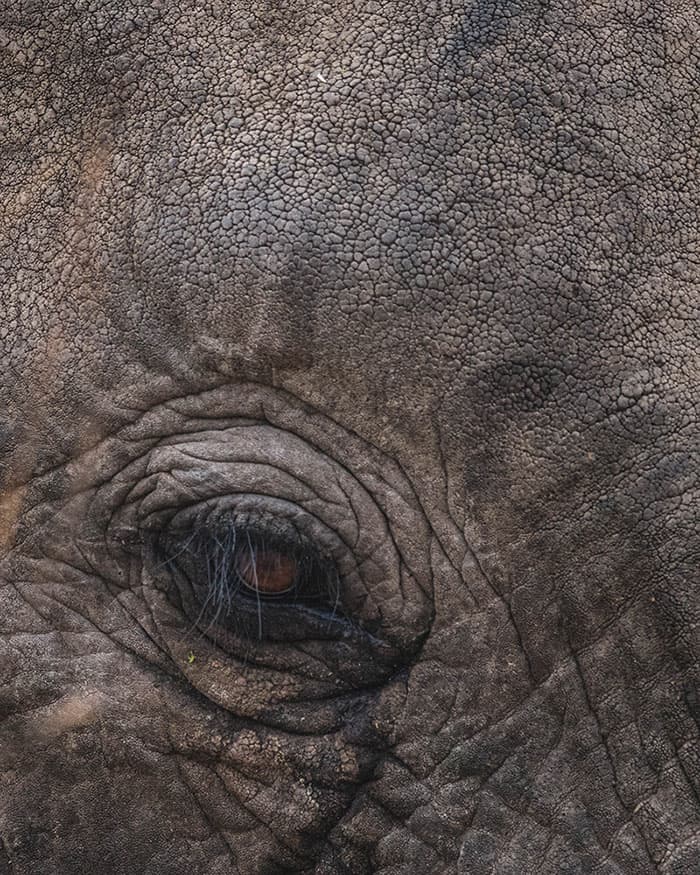
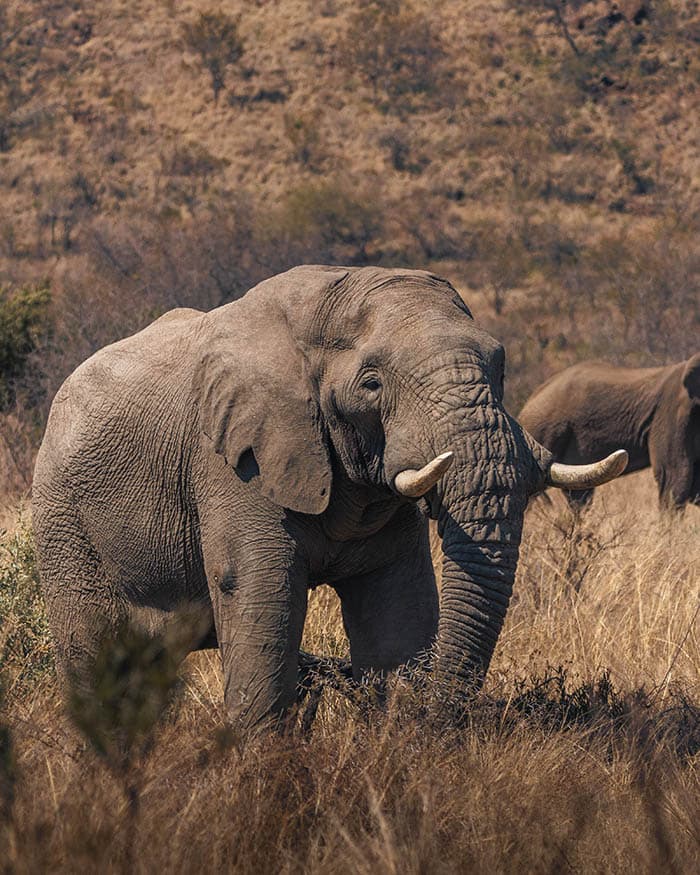
How many elephants are in Pilanesberg?
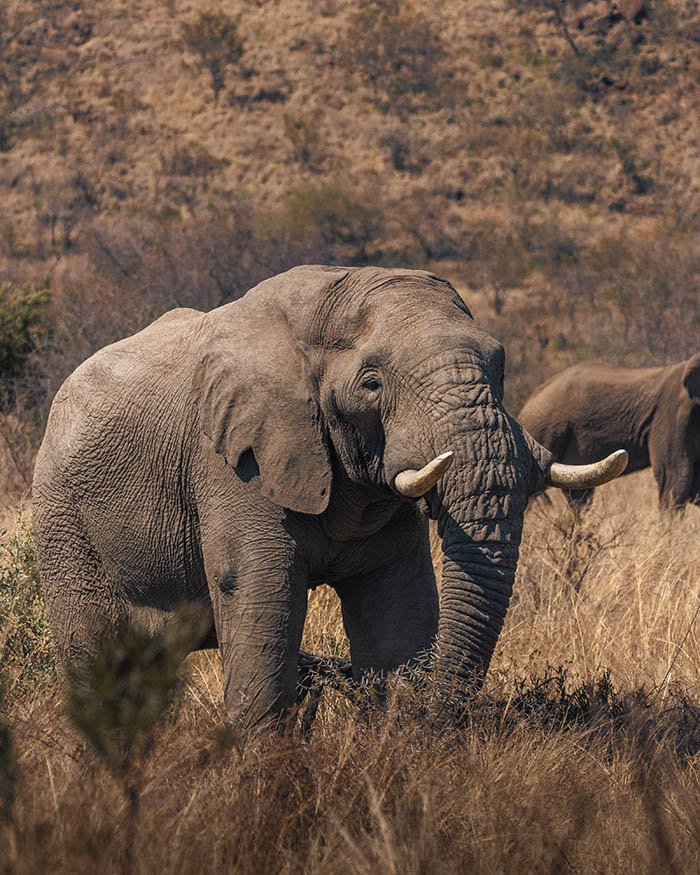
The last widely quoted census figure, from 2010, put Pilanesberg's elephants at 220 to 380. The population has grown since then, and today there are several hundred elephants in the park. We haven't found a current official count we're confident enough to quote.
Elephant numbers are one of the park's big management questions. A fenced park can only hold so many elephants before they start changing the habitat, and options like contraception have been discussed for years. Elephant management in Pilanesberg and nearby Madikwe has been debated in Parliament through 2025 and 2026.
Pilanesberg's elephants also have a famous history. The first elephants brought in during the 1980s were young orphans from culling operations, without older animals to learn from. As they grew up, some of the young bulls became unusually aggressive and killed more than a dozen rhino, until older bulls were brought in from Kruger. The older bulls kept the youngsters in line, and the killing stopped. It's now a textbook example of why elephant social structure matters.
What it means for you: elephants are the most dependable big sighting in Pilanesberg. Of all the sightings logged on opspoor in the park so far, elephant is the most common species by a clear margin. See our elephant spotting tips (written for Kruger, but they work just as well here).
Rhino, brown hyena and buffalo
Rhino
Pilanesberg has both white and black rhino, and it's one of the better places in South Africa to see them. The park doesn't publish how many it has, for good reason: rhino numbers and locations are valuable information to poachers. Any website giving you a current Pilanesberg rhino count is guessing. For the same reason, rhino can't be logged on opspoor at all.
African wild dogs
Wild dogs were released into Pilanesberg in 1999 and bred in the park for years afterwards, despite sharing it with a healthy lion population. Today their status is unclear: there hasn't been a confirmed public sighting in years, and the park hasn't published a recent count, so we can't tell you whether a pack is still there. Don't plan a Pilanesberg trip around wild dogs; Kruger is a far better bet. See how to spot wild dogs on safari.
Brown hyena
Pilanesberg is one of the best public parks in South Africa for brown hyena, a shy, shaggy, mostly nocturnal scavenger that most visitors have never heard of. They're seen most often very early and late in the day. There's no recent public count.
Buffalo
Buffalo complete the Big Five in Pilanesberg but are less often seen than elephant, as they tend to keep to denser bush. Again, there's no reliable current public count. Our buffalo spotting guide has tips for finding them.
The rest of the park
The most recent detailed figures we could find for Pilanesberg's other large mammals come from a 2010 census, so treat them as a rough guide rather than today's numbers:
Impala: 1,800 to 3,000
Plains zebra: 1,100 to 1,700
Blue wildebeest: about 630
Greater kudu: 440 to 600
Giraffe: 130 to 170
Hippo: about 50
Nile crocodile: about 60
All told, the park held roughly 10,000 large mammals at the time. Add more than 360 recorded bird species, and it's easy to see why Pilanesberg punches so far above its size.
Pilanesberg animal checklist
This is the checklist opspoor uses for Pilanesberg, grouped by how likely you are to see each animal on a typical self-drive visit. In the opspoor app, your Life List keeps track of the animals you've logged, so you can see how much of the list you've ticked off.
Mammals you'll almost certainly see
Elephant, Giraffe, Plains Zebra, Blue Wildebeest, Impala, Greater Kudu, Springbok, Waterbuck, Warthog, Chacma Baboon, Vervet Monkey, Black-Backed Jackal, Banded Mongoose, Dwarf Mongoose, Yellow Mongoose, Cape Hare and Scrub Hare.
Mammals you'll often see
Buffalo, Hippo, Eland, Red Hartebeest, Bushbuck, Common Duiker, Steenbok, Klipspringer (Rock Antelope), Bat-Eared Fox, Rock Hyrax, Cape Ground Squirrel, Smith's bush squirrel, Slender Mongoose, Water Mongoose, African Wildcat, Large-Spotted Genet, Small-spotted Genet, Lesser Bushbaby and Springhare. The last few are mostly seen at night or at dusk.
Mammals you'll be lucky to see
Lion, Cheetah, Brown Hyena, Spotted Hyena (Sources say there is one), Sable, Roan, Tsessebe, Honey Badger, Caracal, Serval, Cape clawless Otter, Bushpig, African Civet, Cape Porcupine, Side-Striped Jackal, Striped Polecat, Selous' Mongoose, White-Tailed Mongoose, Thick-Tailed Bushbaby, Jameson's Red Rock Rabbit and Hairy-Footed Gerbil.
The rare ones
Leopard, Aardvark and Aardwolf. If you see any of these, you've had a very good day. An African wild dog would be rarer still: there hasn't been a confirmed sighting in years.
Plus rhino
White Rhino and Black Rhino. They're not on opspoor's loggable list, for their own protection, but they're very much part of the park.
Birds worth looking out for
Pilanesberg has more than 360 recorded bird species. A few highlights, from easy to hard:
Easy: Lilac-Breasted Roller, African fish Eagle, Southern Yellow-Billed Hornbill, Grey Go-Away-Bird, Crested Barbet, African Hoopoe, Fork-Tailed Drongo and Pied Kingfisher.
Keep your eyes open: Common Ostrich, Goliath Heron, Brown Snake Eagle, Tawny Eagle, Crimson-Breasted Shrike, Malachite Kingfisher, Spotted Eagle-Owl and White-Backed Vulture.
Lucky: Secretarybird, Kori Bustard, Martial Eagle, Bateleur, Southern Ground Hornbill, Saddle-Billed Stork, Lappet-Faced Vulture and Verreaux's Eagle-Owl.
Very rare: African Crowned Eagle and African Pygmy Goose.
Reptiles
Nile Crocodile and Leopard Tortoise are the ones most visitors see. Also present: water (Nile) Monitor, Rock Monitor, African Helmeted Terrapin, Southern Tree Agama, Ground Agama, Flap-Necked Chameleon, Puff Adder, Boomslang, Snouted Cobra, Mozambique Spitting Cobra, Black Mamba and Southern African Python. Please enjoy the snakes from inside the car.
Frequently asked questions
How many lions are in Pilanesberg?
About 44 lions older than one year, according to a 2023 study (likely range 38 to 49). Older figures of 60 to 70 are out of date.
How many leopards are in Pilanesberg?
Roughly 35. A 2026 study estimated about 7 leopards per 100 km² across the park's tourist area, using camera traps and tourist photos.
How many cheetahs are in Pilanesberg?
A small, managed population with no reliable recent public count. Cheetahs are moved between reserves as part of a national program, so the number changes.
How many elephants are in Pilanesberg?
Several hundred. The last widely quoted census (2010) counted 220 to 380, and the population has grown since.
How many rhinos are in Pilanesberg?
The park doesn't publish rhino numbers, to protect them from poachers. It has both white and black rhino.
Can you see the Big Five in Pilanesberg?
Yes. Pilanesberg has lion, leopard, elephant, buffalo and rhino, and it's one of the most accessible Big Five parks in South Africa, about 2 to 2.5 hours from Johannesburg. Leopard is the hardest to find.
Are there wild dogs in Pilanesberg?
Possibly, but don't count on it. Wild dogs were reintroduced in 1999, but there hasn't been a confirmed public sighting in years, and no recent official count has been published. For wild dogs, Kruger is a much better bet.
See what's been seen recently
Population numbers tell you what's in the park. Recent sightings tell you where to drive this morning. Download opspoor to see what's been logged in Pilanesberg recently, Log a Sighting whenever you find something, and watch your Life List grow. For the practical side of a visit, read our Pilanesberg self-drive guide and our guide to Pilanesberg sightings today.
See recent Pilanesberg sightings →
Sources
Ball, I.A. et al. (2023). Considerations on effort, precision and accuracy for long-term monitoring of African lions in fenced protected areas. Ecology and Evolution.
Davis, R.S. and Gopalaswamy, A.M. (2025). Using spatial capture-recapture models to inform lion management in fenced protected areas. The Journal of Wildlife Management.
Leeman et al. (2026). Tourist sightings improve the precision of camera trap-derived density estimates using spatial capture-recapture models. Remote Sensing in Ecology and Conservation.
Endangered Wildlife Trust (2025). A New Chapter for Pilanesberg's Cheetahs.
Pilanesberg National Park, Wikipedia (Operation Genesis history and 2010 census figures).
Gallery