How to Spot Buffalo on Safari (Kruger Tips)
Cape buffalo are one of the easier Big 5 to find in numbers, but reading the herd right is what separates a distant sighting from a great one.

Cape buffalo are one of the more reliable Big 5 sightings. They move in large herds, graze in open areas, and don't hide the way solitary predators do. But there's a real difference between glimpsing a herd at a distance and getting a proper sighting, and knowing how to read the herd is what makes that difference.
Know what you're looking for
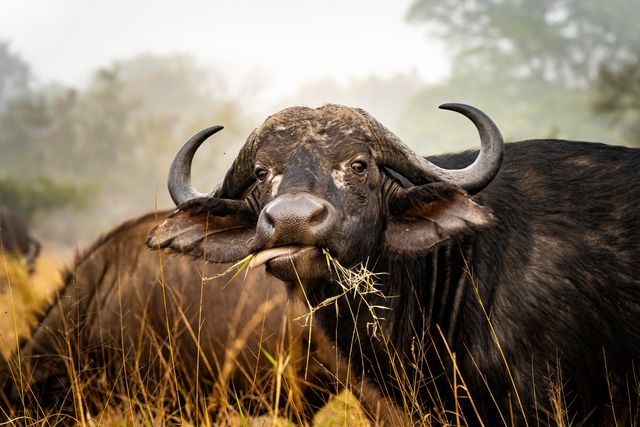
Cape buffalo are heavily built, dark grey to black animals, and adults commonly weigh well over half a tonne. Both sexes carry horns, but mature bulls have a thick, fused "boss" across the forehead that sits like a helmet. Herds are usually easy to pick out on open ground because of their sheer bulk and their tendency to stay tightly grouped, and a distant dark, shifting mass on a floodplain or grassy slope is often worth a second look through binoculars.
Follow the herds, not individuals
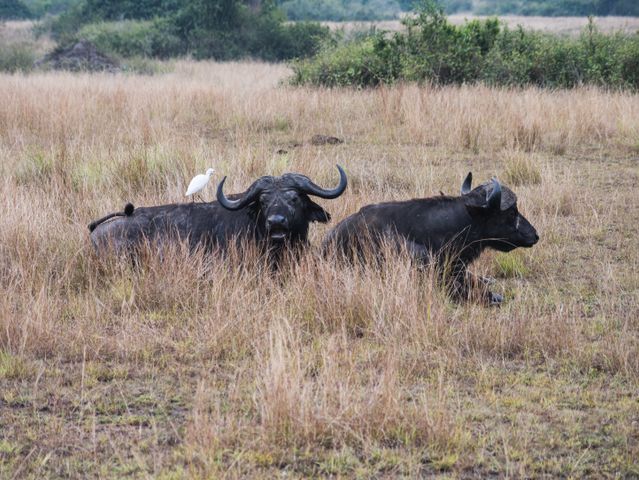
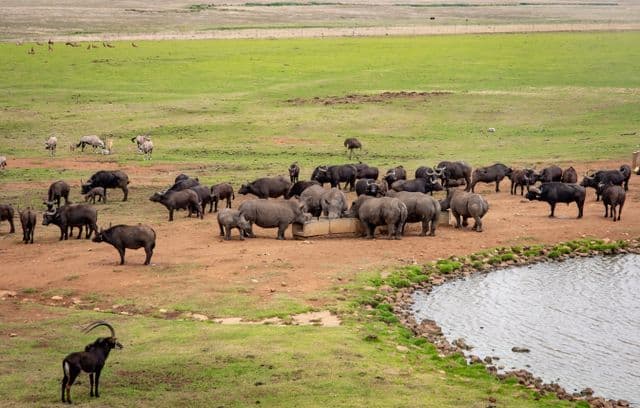
Buffalo herds can number anywhere from a few dozen to several hundred animals, and they move together across grassland and near water sources. A herd's dust cloud or the sound of moving hooves is often visible or audible well before the animals themselves, so it's worth pausing to check dry, open ground even if nothing is obviously there yet. Fresh dung and churned-up tracks on a road or riverbed are a strong sign that a herd passed through recently.
Water in the morning and evening
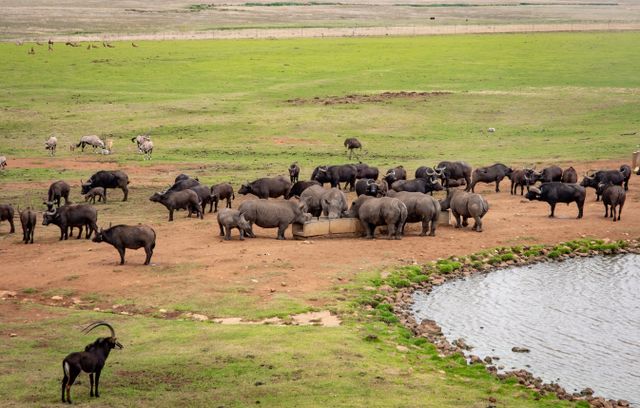
Buffalo need to drink daily and are creatures of habit, often visiting the same waterholes and river crossings at similar times. Early morning and late afternoon are when herds are most likely to be moving to or from water. A good waterhole with recent tracks and dung is worth watching and waiting at. Patience usually pays off here more than driving from spot to spot.
Midday: look for shade and mud
In the heat of the day, herds often slow down and rest in shade or wallow in mud to cool off and keep biting insects away. Thicker riverine vegetation, tree lines along drainage lines and muddy pans are all worth checking between late morning and mid-afternoon, when open grassland can seem empty.
Watch for old, isolated bulls
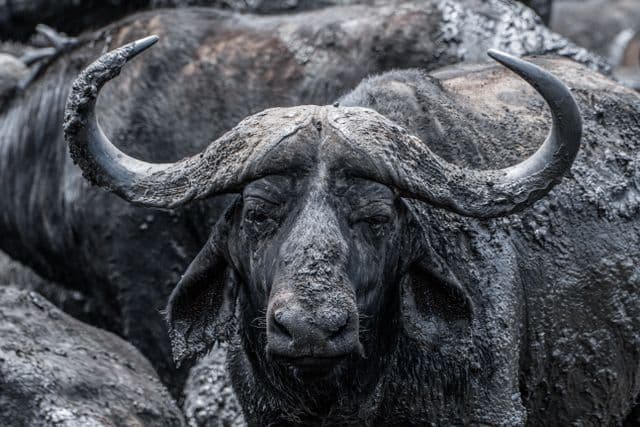
Older males that have left the herd, known as "dagga boys", are often found alone or in small bachelor groups, wallowing in mud near water. They're less mobile and more predictable in location than the main herd, and their heavily bossed horns make for one of the more striking individual sightings. Because they stay in one area for long stretches, a dagga boy seen once is often still there days later.
Listen for oxpeckers
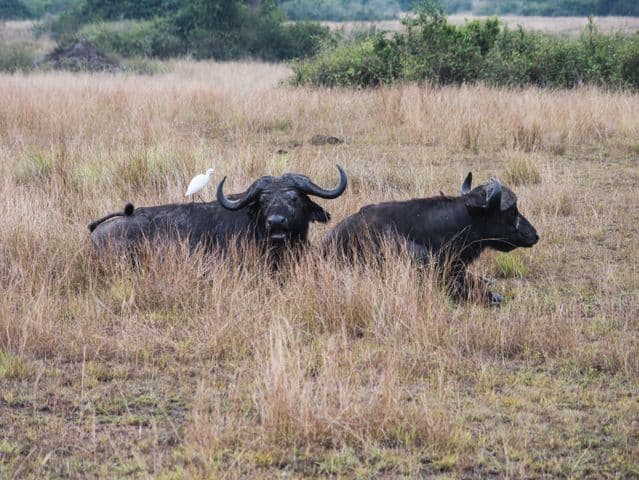
Red-billed and yellow-billed oxpeckers feeding on ticks are almost always found riding on buffalo, and their chattering calls can give away a herd's position in thick bush before you can see the animals themselves. If you hear oxpeckers nearby, it's worth slowing down and scanning carefully.
Where predators are, buffalo tension follows
Lions are the main predator of buffalo, and a herd that suddenly bunches up, turns to face one direction or calls loudly is often reacting to something you can't yet see. These moments can lead to some of the most dramatic sightings of a trip, so if a herd looks alert and unsettled, stay quiet and watch what unfolds from a safe distance.
Photography tips
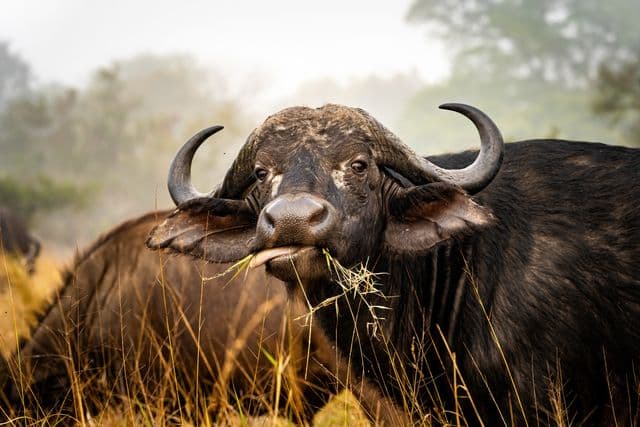
Buffalo are at their best in soft light. Early morning and late afternoon give warm tones and long shadows, and backlit dust from a moving herd makes for striking images. Focus on the eyes, and try including oxpeckers or mud-caked faces for character. A little patience at a waterhole often gives you natural behaviour rather than a herd walking away.
Treat them with real caution
Buffalo are considered one of the most dangerous animals to encounter on foot in Africa, and even from a vehicle, an agitated herd or a lone dagga boy can charge. Keep engine noise and movement calm and unhurried, give the animals space, never block their path or box them in, and never approach on foot. If a buffalo stares at you, lifts its head and stops feeding, it's time to back away quietly.
Quick checklist
Scan open grassland for dust clouds and dark, moving masses
Check waterholes and river crossings at dawn and dusk
Look for wallowing bulls near water in the midday heat
Listen for oxpeckers in thick bush
Keep your distance and stay in your vehicle
Log your sighting with opspoor
Herd movements and waterhole patterns shift by season, so logging what you see in opspoor helps other visitors know where buffalo have actually been recently, even in areas with no signal, since sightings sync once you're back online. Browse recent species sightings to check current activity before you head out.
Gallery