How to Spot Elephants in Kruger (Safari Tips)
Where to find elephants in Kruger: the rivers and camps to prioritize, the best season and time of day, the signs a herd is close, how to read elephant body language, and how to stay safe.

Kruger has one of the largest elephant populations in Africa, so seeing an elephant here is rarely the problem. The difference between a grey shape disappearing into the mopane and a breeding herd crossing the road in front of your car comes down to three things: knowing where the water is, knowing what time the herds come to it, and knowing how to read an elephant once you've found one.
This guide covers all three: where in Kruger to look, how the seasons and time of day change things, the signs that tell you a herd is close, how elephant families are organized, and how to stay safe and respectful around the largest land animal on earth.
Kruger's elephants at a glance
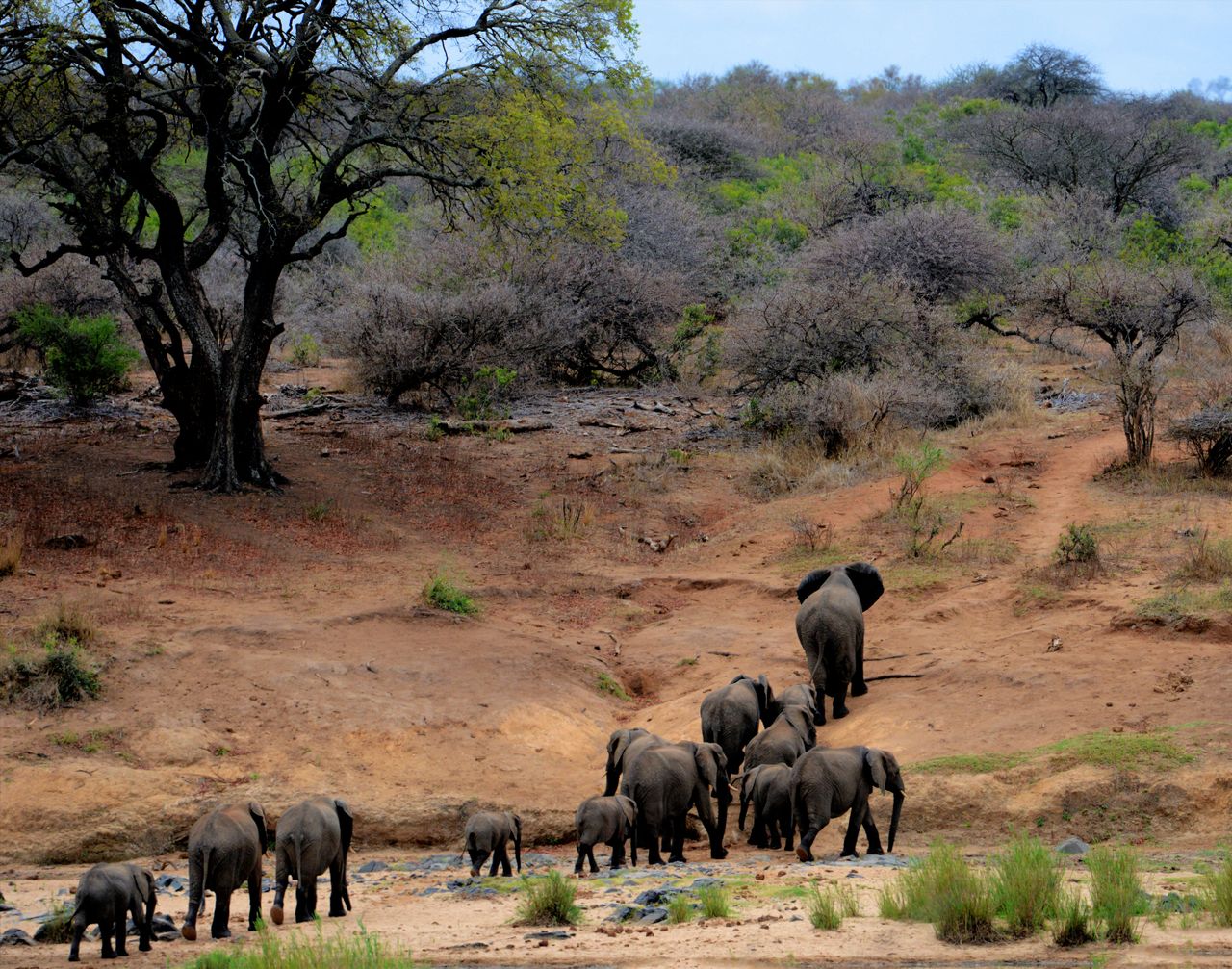
Numbers: SANParks aerial counts in recent years have put Kruger's elephant population at roughly 30,000 animals, spread across nearly 20,000 km² of park.
Where they're densest: the mopane country north of the Olifants River. The south has plenty too, but the north is elephant country.
Daily needs: an adult elephant feeds for most of the day and night, eats well over 100 kg of vegetation and can drink more than 150 liters of water. That thirst is the single most useful fact for finding them.
Status: African savanna elephants are listed as Endangered by the IUCN across their range, even though Kruger's own population is large and well protected.
Why water decides everything
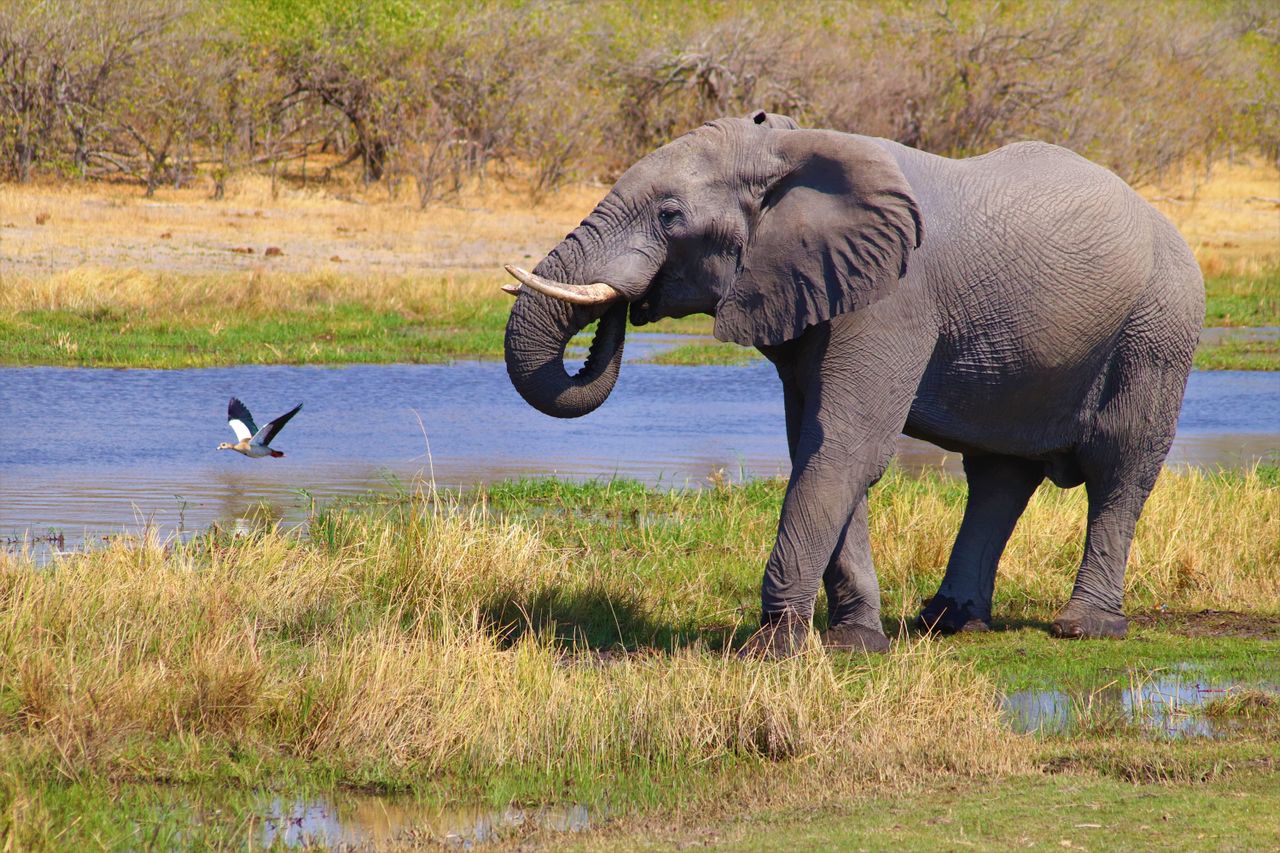
Elephants have to drink every day, and a breeding herd with young calves rarely strays far from water. In the dry season (roughly May to October) most seasonal pans dry up and the herds are pulled toward the perennial rivers and the larger dams. That's when Kruger's elephant viewing is at its most predictable: find permanent water, give it time, and the herds come to you.
Kruger's main perennial rivers run west to east across the park, which makes them easy to plan around:
Crocodile River, the park's southern boundary.
Sabie River, through the south, past Skukuza and Lower Sabie.
Olifants River, through the center of the park. "Olifants" is Afrikaans for elephants, and the name is earned.
Letaba River, flowing past Letaba rest camp into the Olifants.
Luvuvhu River, in the far north near Pafuri.
The Shingwedzi River in the north stops flowing in the dry season but keeps pools, and those pools become elephant magnets once everything else is dry.
In the wet season (November to March), water is everywhere. The herds spread out into the bush, drink from rain-filled pans, and become much harder to predict. You'll still see elephants, often plenty of them, but you'll find them feeding in the bush rather than lined up along a riverbank.
Where to look in Kruger
The south: Skukuza, Lower Sabie and the Crocodile River
The road along the Sabie River between Skukuza and Lower Sabie is one of the most productive stretches in the park for almost everything, elephants included. Herds regularly come down to the river to drink and cross, especially from late morning. Sunset Dam, just outside Lower Sabie, is worth a stop at any time of day. Along the Crocodile River, the roads near Crocodile Bridge and Malelane often have herds coming down to drink on the park side of the boundary.
The center: the Olifants River
Olifants rest camp sits high above the river, and the view from the camp's lookout is one of the best places in Kruger to watch herds cross the riverbed below without moving your car at all. Bring binoculars and a flask and give it an hour.
The north: Letaba, Mopani and Shingwedzi
North of the Olifants the landscape changes to mopane woodland and shrubveld, and elephants dominate it. A few places to prioritize:
Letaba rest camp overlooks the Letaba River, and herds are often visible from the camp itself. The Elephant Hall at Letaba is worth an hour: it tells the story of Kruger's elephants and displays the tusks of the famous "Magnificent Seven," the legendary big tuskers of the park's history.
Mopani rest camp overlooks Pioneer Dam, a reliable dry-season water point.
Shingwedzi and the river road toward Kanniedood Dam are excellent in the dry months, when the river's remaining pools pull herds in from the surrounding mopane.
The north is also where you're most likely to meet a genuinely big tusker. Kruger's northern elephants have long been associated with large ivory, and a bull with tusks close to the ground is one of the great sightings in African wildlife.
The far north: Pafuri
The Luvuvhu River around Pafuri has lush riverine forest, fever trees and huge nyala trees, and elephants feed along it year-round. It's a long drive, but it feels like a different park.
The signs that a herd is close
You'll usually find signs of elephants long before you find the elephants. Learn to read them and you'll know which roads are worth slowing down on.
Dung: large, fibrous balls of chewed grass and twigs. Fresh dung is moist, darker, and often still steaming on a cold morning; dung beetles rolling it away are another sign it's recent. Old dung is dry, pale and falling apart.
Damage: freshly snapped branches with pale, wet wood showing, bark stripped off trees, and trees pushed over across the road. White, sap-wet breaks mean hours, not days.
Tracks: huge, round prints with a cracked, textured sole pattern. Front feet leave rounder prints, hind feet more oval ones.
Wet mud and dust: an elephant with a dark, wet lower body has just been at water or a wallow. A herd with a fresh coat of red dust has just been dust-bathing nearby.
Listen before you look
Elephants are surprisingly quiet walkers, but feeding herds are noisy. The crack of a branch breaking is the classic giveaway in thick bush, and it carries a long way. On a still morning, switch off the radio, open the windows and listen at any spot that looks promising.
Elephants also communicate with low-frequency rumbles, some of them below the range of human hearing. The ones you can hear sound like a deep stomach growl. If you hear rumbling nearby, the herd is close, and probably closer than you think.
Best time of day
Elephants are active around the clock, but their movements follow a daily rhythm you can plan around:
Early morning: herds are feeding and moving through the bush, often toward water. Good for sightings on the road, less predictable in location.
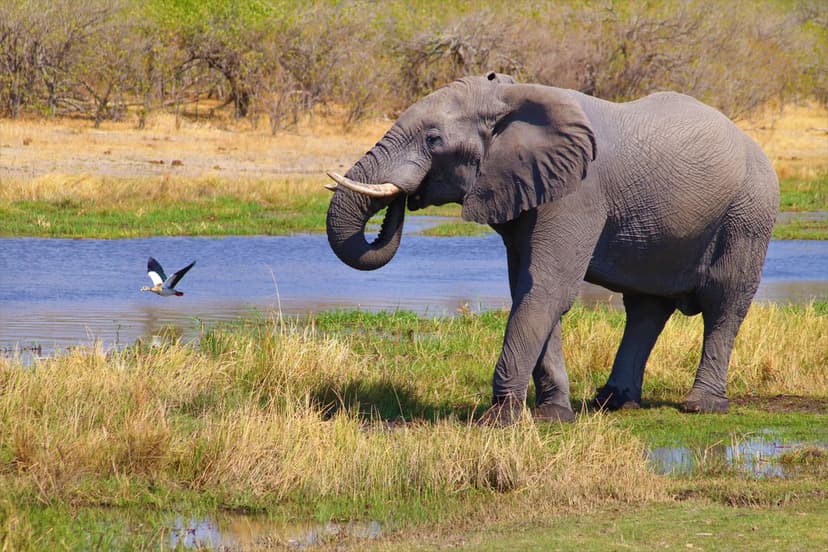
Late morning to early afternoon: the heat pushes herds to water to drink, bathe, mud-wallow and cool off. This is prime time at rivers and dams, and the best time for the social behavior everyone wants to see: calves playing in the water, spraying, and whole families drinking side by side.
Late afternoon: herds move away from water and back into the bush to feed, often crossing roads as they go. The light is also at its best for photographs.
A practical plan for a Kruger day: drive the bush roads early for predators, then spend midday parked at a river or dam when the elephants come in, rather than retreating to camp.
Understand the herd
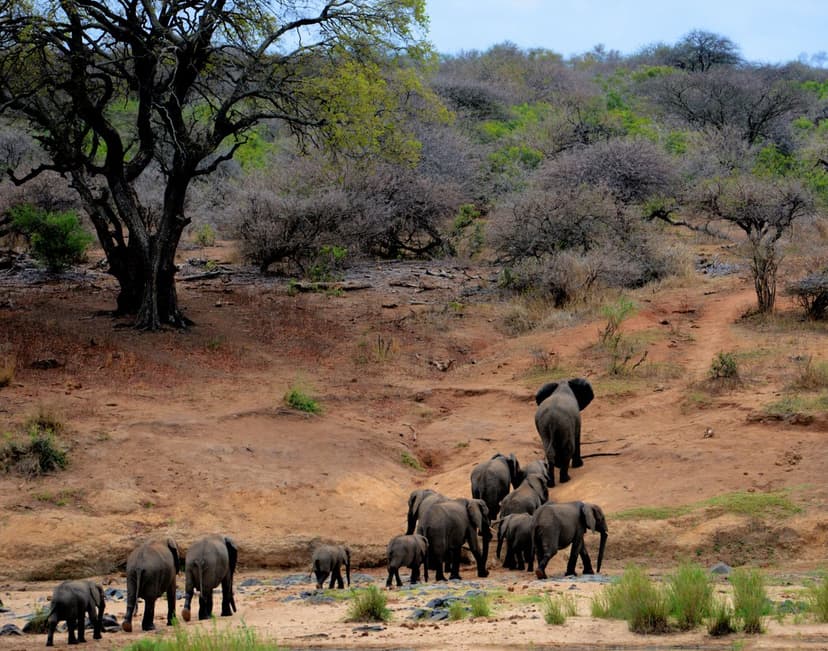
Elephant society is built around related females. A breeding herd is led by the matriarch, usually the oldest and most experienced cow, and is made up of her daughters, sisters and their calves. She decides where the herd goes and when, and the others follow her lead. When a breeding herd crosses a road, watch for her: she's usually at the front or the back, and the rest of the family takes its cue from her.
Bulls leave the family herd in their teens and live alone or in loose bachelor groups. Older bulls are often found on their own, feeding near water, and tend to be calmer than a breeding herd with small calves. The exception is a bull in musth, a periodic state of heightened testosterone. Musth bulls are easy to identify: a dark, wet streak running down the side of the face from the temporal gland between the eye and the ear, and a constant dribble of urine that stains the inside of the back legs. They are more aggressive and less predictable than usual. Give them a lot of room.
Reading elephant body language
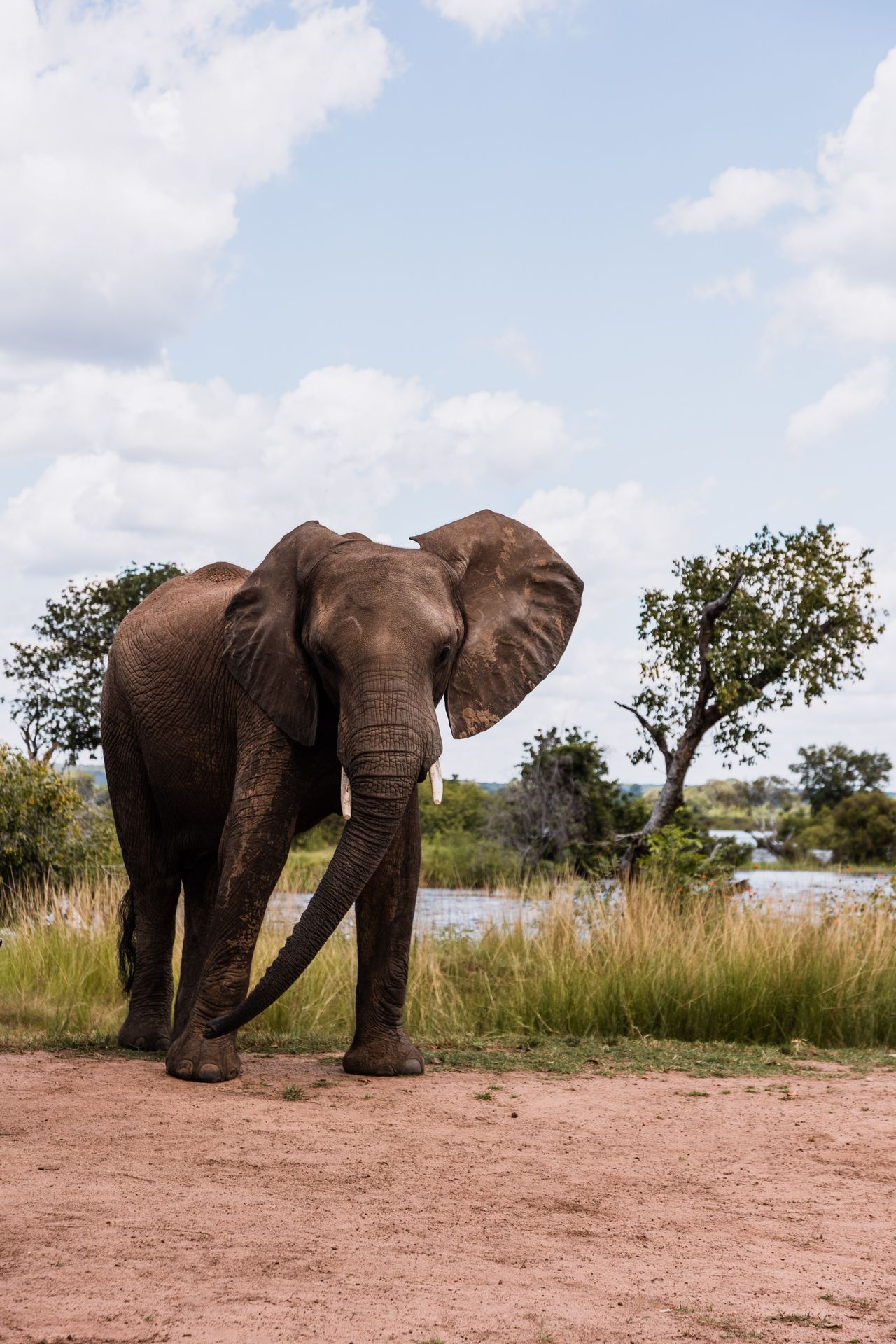
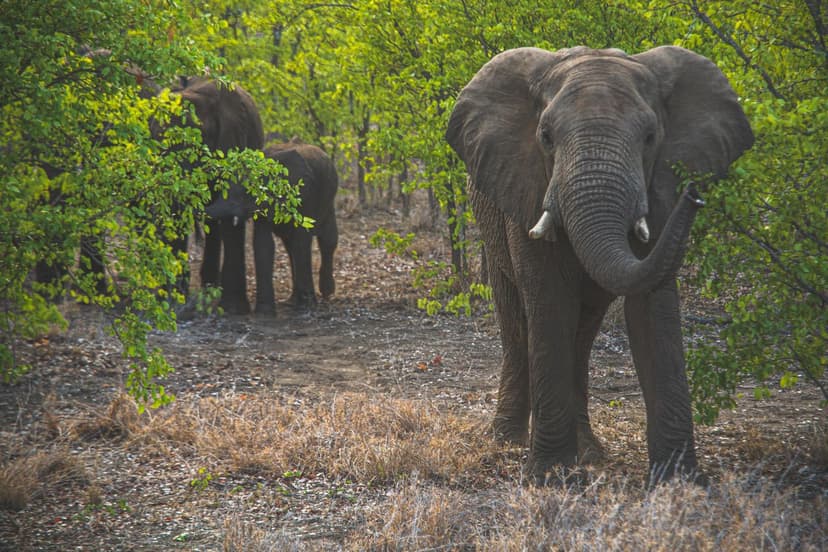
Most elephant encounters from a vehicle are peaceful, and a relaxed elephant is easy to recognize: ears loose against the body, feeding or walking steadily, ignoring you. Signs that an elephant is unhappy with you:
Ears spread wide and the head held high
Shaking the head so the ears slap
Stopping, turning to face you and staring
Kicking up dust, swinging a trunk or breaking a branch while watching you
A short, fast rush toward the car, often with trumpeting (a mock charge)
Any of these means you're too close. Back away slowly, calmly and quietly. Don't rev the engine, don't hoot, and don't argue with a six-tonne animal over the road.
Staying safe around elephants
Keep your engine running near elephants, so you can move away smoothly if you need to.
Always leave yourself an escape route. Don't park where a herd could box you in, and don't let other cars block you from behind.
Never get between a cow and her calf, or between a herd and water it's heading for.
Let them cross. If a herd is crossing the road, stop well back and wait. Some members of the herd may still be in the bush on either side.
Stay inside your vehicle, with arms and heads inside the windows. Kruger's speed limits are 50 km/h on tar and 40 km/h on gravel; around elephants, slower is always better.
Photographing elephants
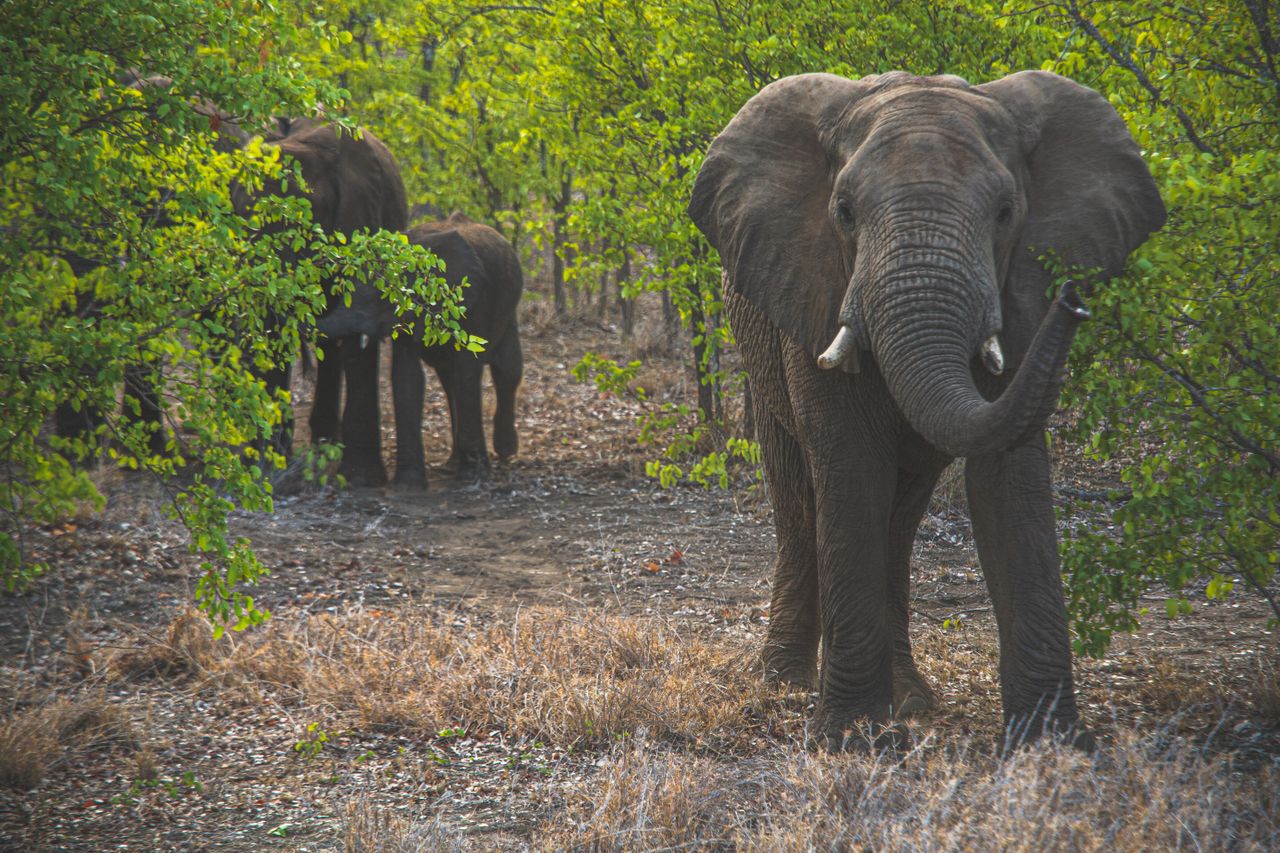
Elephants reward a wide lens as much as a long one. A herd crossing a riverbed or a family group drinking together tells more of a story than a tight head shot. Get low in the car, shoot through the window rather than over the roof, and keep the herd's eyes in focus. Dust-bathing in late afternoon backlight is one of the classic Kruger images, and it happens most often in the dry season when herds are near rivers with open sandy banks.
opspoor Premium's Photography Mode shows golden hour and the sun's direction on the map, so you can pick a waterhole where the light will be behind you when the herds arrive.
Log your sightings with opspoor
Herd movements change week by week with water, rain and season, and that's exactly what a guidebook can't tell you. When you Log a Sighting in opspoor, other visitors can see where elephants have actually been seen recently, including which way they were moving. Most of Kruger has no signal, so opspoor saves your sighting on your phone and syncs it automatically when you're back in range.
Before you drive, check recent elephant sightings in Kruger and the wider Kruger park page.
Frequently asked questions
Where is the best place to see elephants in Kruger?
Anywhere with permanent water in the dry season. The Sabie River between Skukuza and Lower Sabie is excellent in the south, the Olifants River in the center, and the Letaba, Mopani and Shingwedzi areas in the north, where elephant numbers are highest.
What is the best month to see elephants in Kruger?
The dry months, from about June to October, are best. Vegetation is thin and water is scarce, so herds concentrate along rivers and at dams. September and October, at the end of the dry season, are often the most predictable of all.
What time of day are elephants most active?
They're active all day, but late morning to early afternoon is when herds come to water to drink and bathe, which makes it the best time to wait at a river or dam.
How many elephants are in Kruger National Park?
Recent SANParks counts put the population at roughly 30,000.
Are elephants dangerous to cars?
Rarely, if you give them space. Most incidents involve vehicles that got too close, blocked a herd's path, or came between a mother and her calf. Keep your distance, keep your engine running and back off at the first warning sign.
Can I still see big tuskers in Kruger?
Yes, especially in the north. Kruger is one of the few places left in Africa where large-tusked bulls are still regularly seen. The Elephant Hall at Letaba tells the story of the park's most famous tuskers.
Before you go
Follow the water, time your drive around the midday drinking window, read the signs on the road, and give every herd the space it asks for. Do that and Kruger's elephants stop being a box to tick and become the highlight of the trip.
Download opspoor before you leave home, check recent sightings when you're in camp, and Log a Sighting whenever a herd crosses your path, signal or not.
Gallery