How to Spot Lions on Safari (Kruger & Pilanesberg Tips)
Where to find lions in Kruger and Pilanesberg: the best time of day and season, the roads to prioritize, and the signs that give a resting pride away.

Lions are the animal almost every first-time safari visitor most wants to see, and they're also the easiest Big Five sighting to drive straight past. A pride flat out in long grass at eleven in the morning looks like a pile of tawny rocks. The same pride at first light, walking down the road toward your car, is the sighting people talk about for years.
The difference is rarely luck. It comes down to three things: being out when lions are actually awake, looking in the kind of country they prefer, and reading the signals the rest of the bush gives off when lions are near. This guide covers all three, with specific places to look in Kruger and Pilanesberg.
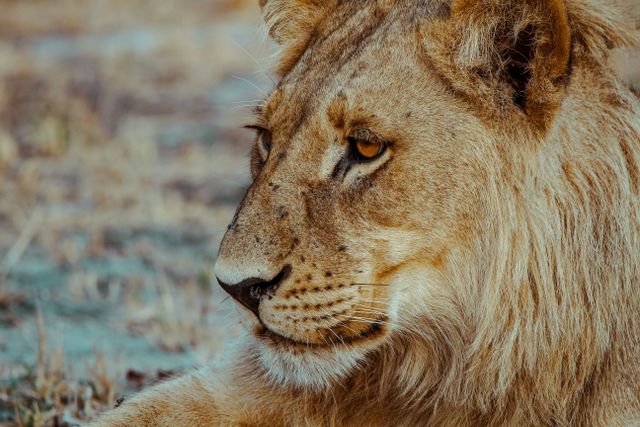
Lions at a glance
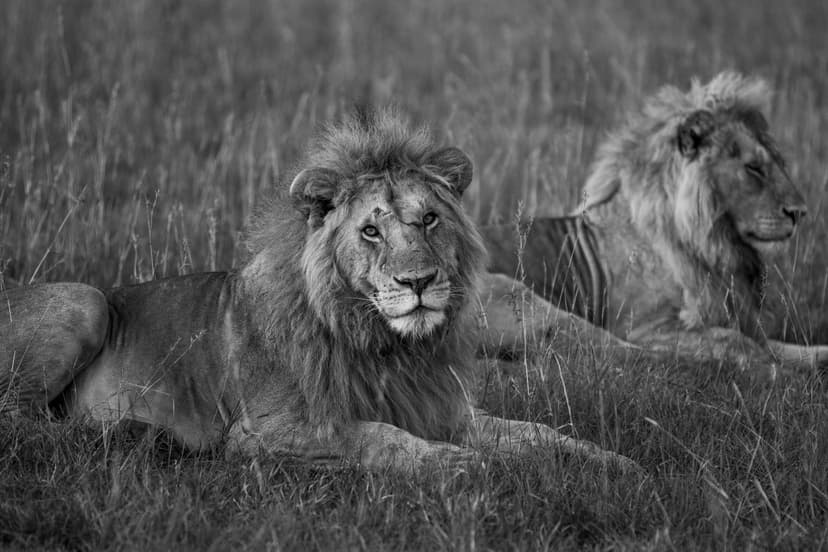
Social cats: lions are the only truly social cats. A pride is built around related females and their cubs, with one or more resident males (often a coalition of brothers) holding the territory.
Sleep: lions rest for up to 20 hours a day. That single fact explains most missed lion sightings.
Kruger: estimates of Kruger's lion population have generally sat somewhere between about 1,600 and 2,000 animals, spread across nearly 20,000 km².
Pilanesberg: a much smaller population in a much smaller park (about 55,000 hectares), reintroduced after the reserve was fenced and restocked. Fewer lions, but far less ground to cover.
Status: lions are listed as Vulnerable by the IUCN. Protected parks like these are among their last strongholds.
Timing is everything
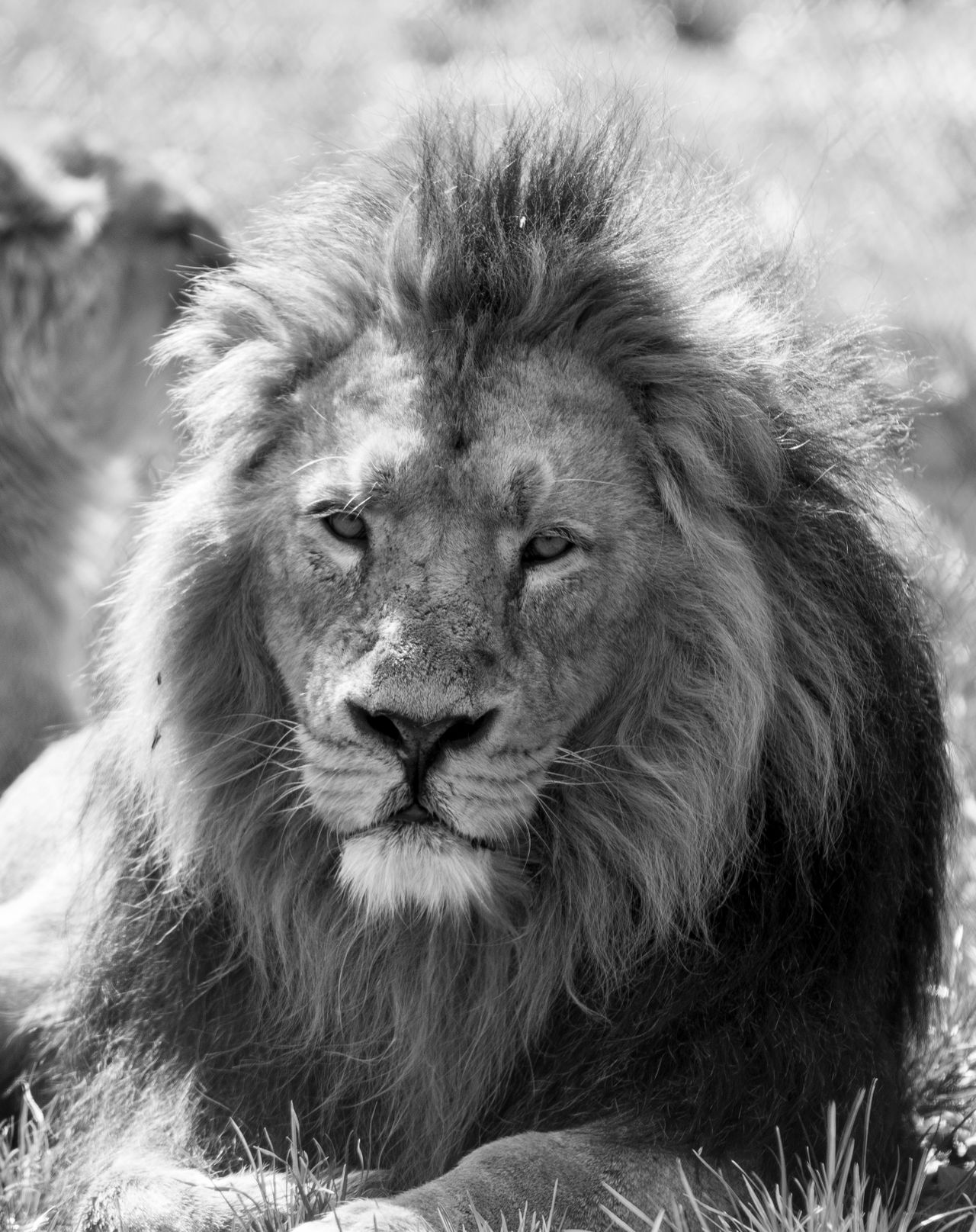
Lions are most active from late afternoon, through the night and into the early morning, when it's cool enough to patrol, hunt and move between resting spots. By mid-morning most prides have found shade and gone to sleep, and they'll stay there until the heat breaks.
Gate opening to about 9am: the best lion window of the day. Prides are still moving, males are still roaring and scent-marking, and lions are often on or beside the road. Be at the gate when it opens.
Mid-morning to mid-afternoon: lions are asleep. You'll only find them if you know exactly where they are, or if you get lucky with a pride resting in the open. This is the time to sit at water for elephants instead.
Late afternoon until gate closing: the second window. Lions wake up, stretch, groom each other and start to move as the light softens. It's also the best light of the day for photographs.
On cold winter mornings, check the tar roads first. Lions sometimes lie on the road surface because the tar holds the previous day's warmth. On hot days the opposite applies: they'll be in the deepest shade they can find, often in drainage lines and under thick bushes right beside the road.
Best season to see lions
The dry season, roughly May to October, is the easiest time of year. Grass is short and thin, the bush opens up, and prey concentrates around the remaining water, which pulls the lions in with it. September and October, at the end of the dry season, are often the most productive months of all.
In the wet summer months (November to March), long grass hides resting lions very effectively and prey spreads out across the park. You'll still see lions, but you'll need to work harder and lean more heavily on the early morning window. The trade-off is that summer is when many antelope give birth, and that brings its own dramatic predator action.
Where lions like to be
Lions follow the grazers. Wherever you find big herds of zebra, wildebeest and buffalo on open, grassy country, you're in lion country. Dense thicket and rocky hillsides are better leopard country; lions prefer places where they can see, and stalk, across open ground.
Kruger: the central plains around Satara
The basalt plains in the center of the park, around Satara, are Kruger's most famous lion territory. The open grassland and knobthorn and marula savanna there support big herds of zebra, wildebeest and buffalo, and some of the park's largest prides. Well-known roads to prioritize:
S100, along the N'wanetsi River east of Satara, one of the most celebrated lion roads in Africa.
The H1-3 and H7 around Satara, and the S41 toward Gudzani Dam.
The roads south toward Tshokwane, where the plains continue.
Kruger: the south
The south of Kruger has high lion densities too, and it's the easiest region to reach from Johannesburg:
Lower Sabie and the H10 toward Tshokwane cross open country with plenty of grazers.
The H4-1 along the Sabie River between Skukuza and Lower Sabie is productive for almost everything, lions included.
Around Crocodile Bridge, the S25 and S28 run through open grassland that's long been a lion favorite.
Kruger: the north
North of the Olifants River, the mopane woodland supports fewer grazers and fewer lions. They're there, but if lions are the priority and your time is limited, spend it in the central and southern parts of the park.
Pilanesberg: the central basin and open plains
In Pilanesberg, lions are most often found on the open grassland of the central basin and the plains, or walking the roads at first and last light. The park's small size is a real advantage: you can cover the open country thoroughly in a single morning, and word of a pride travels fast. Get onto the gravel loops early rather than sticking to the tar, and scan open grassland slowly while the lions are still active. Our Pilanesberg self-drive guide has gate times, road tips and sample day plans.
Signs that lions are close
Most lion sightings start with a clue, not a lion. Learn to read these and you'll know when to slow down and when to wait.
Alarm calls: zebra give a sharp, barking alarm; impala snort and stamp; kudu give a deep bark; baboons shriek from the trees. Francolins and guineafowl cackling loudly at the base of a bush can mean something is hiding in it.
Staring prey: a herd of wildebeest, zebra or impala all standing still and staring in the same direction is one of the best signs in the bush. Follow their gaze.
Giraffe: with the best view in the park, a giraffe standing motionless and fixated on one spot is often looking at a predator.
Vultures: vultures dropping out of the sky, or crowded in a tree without landing, can mean a kill with lions still on it. Lions often keep vultures off the carcass.
Tracks: lion tracks are big and round, roughly the size of a palm, with four toes, no claw marks, and a large, three-lobed rear pad. Fresh tracks on a dusty road in the early morning mean lions walked that road overnight. Note the direction and follow the road.
Stopped cars: a cluster of vehicles all facing the same way is the oldest sign in Kruger. Approach slowly and don't block anyone in.
Listen for the roar
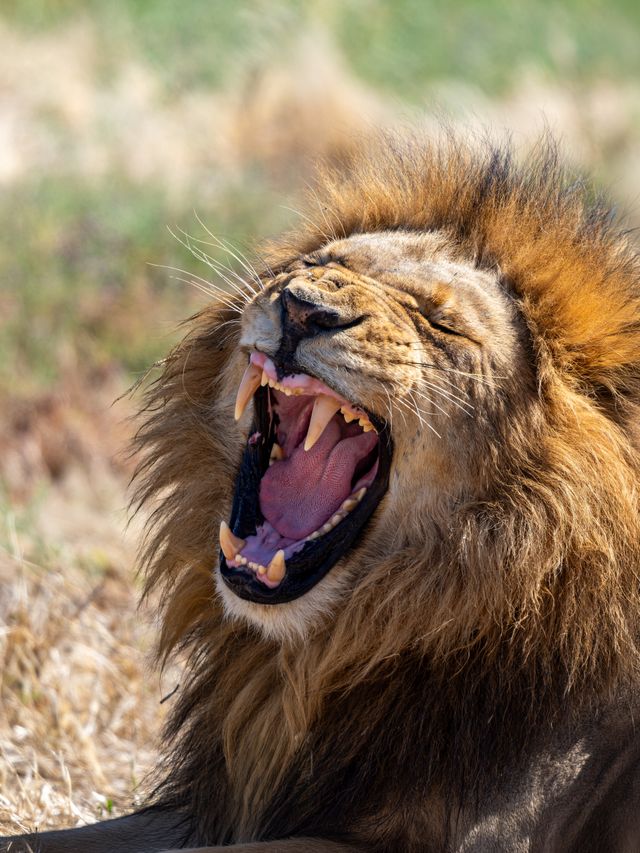
A lion's roar can carry for several kilometers on a still night, and roaring is most common in the hours around dawn and dusk. If you hear lions roaring from your rest camp before the gates open, note the direction. That's often where the day's first sighting will be. Lions also make softer grunting contact calls when a pride is spread out, which is a sign they're close.
How to scan for resting lions
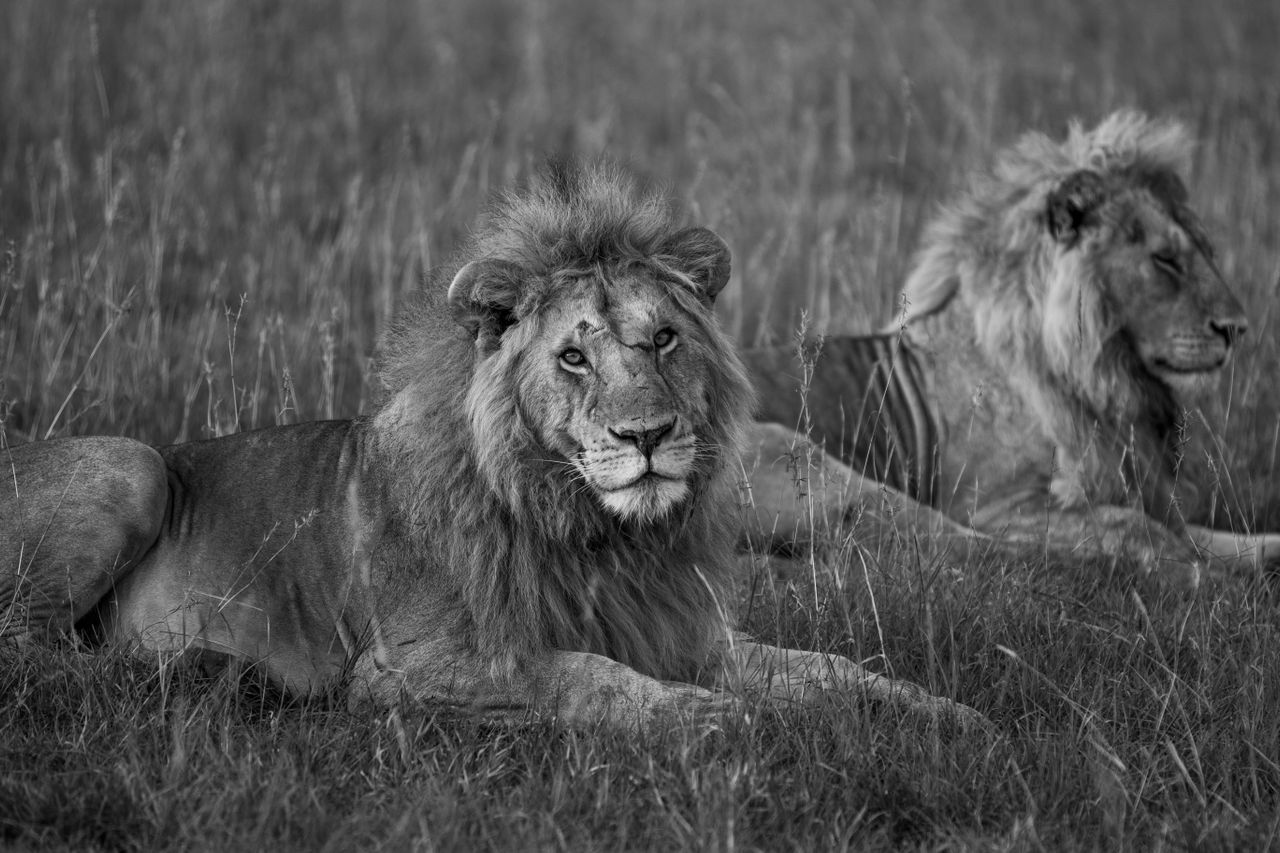
Because lions spend so much of the day lying down, the hardest skill is spotting a lion that isn't moving:
Look under, not at. Scan the shade beneath bushes and trees rather than the bush itself.
Look for the wrong shape. A round ear, a flicking tail tip or a raised head breaks the outline of grass and rock. The black on the back of the ears and the tail tuft are often the first thing you'll notice.
Check termite mounds. Lions use them as lookouts, especially in the morning.
Drive slowly. At 20 to 25 km/h on gravel you'll see far more than at the speed limit. Stop and scan anywhere the bush opens up.
Understand the pride
Knowing a little about pride life helps you predict what a sighting will do next:
Females do most of the hunting, usually as a group. If lionesses are alert, spread out and focused on a herd, stay put. A hunt may be about to start.
Males patrol and defend the territory, roaring and scent-marking bushes along the way. A male walking purposefully along a road will often keep walking along it, so it's worth driving ahead slowly and letting him come past you.
Mating pairs separate from the pride for several days and mate every 20 to 30 minutes. If you find a mating pair, wait. You'll almost certainly see it again.
Cubs are hidden in dense cover for their first weeks. Once they join the pride they're playful and curious, and late afternoon is the best time to watch them.
Kills keep a pride in one place, sometimes for days with a large animal like a buffalo or giraffe. A kill is the one situation where you can come back to the same lions the next morning with a good chance of finding them.
Staying safe and respectful
Stay inside your vehicle, with arms and heads inside. Lions generally ignore cars, but a person leaning out breaks the vehicle's outline and becomes something they notice.
Keep your voice down and your engine off once you're parked in a good position, unless you're close enough that you may need to move away.
Never get between lions and their kill, their cubs, or the direction they're walking in.
Don't block the road for other visitors, or the lions. Let them cross, and never drive off-road to get closer.
Don't try to provoke a reaction. No calling, whistling or banging on the door to wake a sleeping lion.
Photographing lions
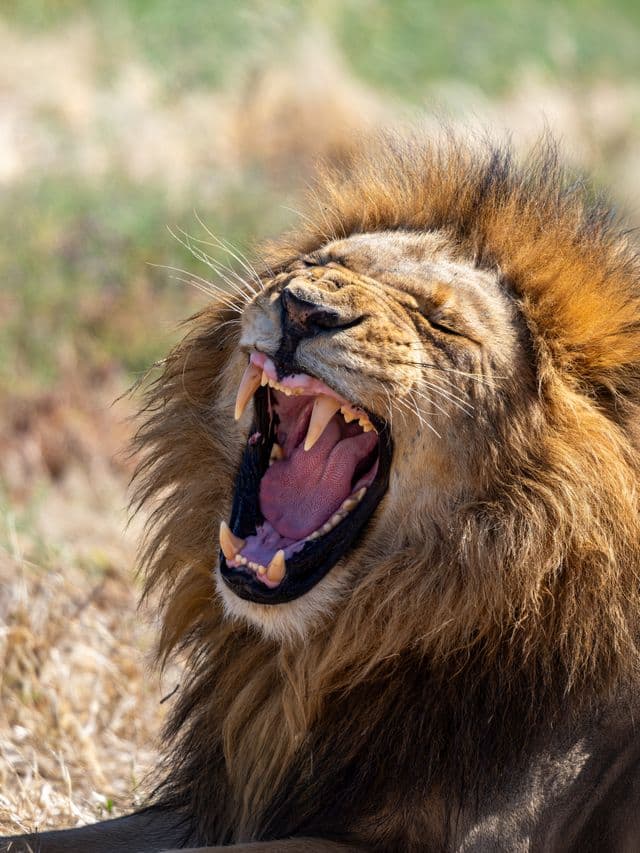
The best lion photographs happen in the first and last hour of the day, when the light is warm and low and the lions are awake. A yawning male, a lioness grooming a cub or a pride walking toward you down a sandy road are the classic shots. Shoot at eye level from the window rather than over the roof, focus on the eyes, and be patient with sleeping lions. A single head lift or yawn is worth waiting half an hour for.
opspoor Premium's Photography Mode shows golden hour and the sun's direction on the map, so you can position yourself with the light behind you before the lions start to move.
Use recent sightings, not guesswork
Lion territories are stable, but where a pride spends any particular week depends on kills, water, prey and season. That's exactly what a guidebook can't tell you. In opspoor, other visitors' sightings show you where lions have actually been seen recently, including which way they were moving. When you find a pride, Log a Sighting and the next person gets the benefit.
Most of Kruger has no signal, so opspoor saves your sighting on your phone and syncs it automatically once you're back in range. We explain how that works in No Signal in Kruger?
Before you drive, check recent lion sightings in Kruger and lion sightings in Pilanesberg. Most lion sightings logged on opspoor were made before 10am, which matches everything above. The more sightings visitors add, the sharper the picture gets.
Frequently asked questions
Where is the best place to see lions in Kruger?
The central plains around Satara, including the S100 along the N'wanetsi River, are Kruger's best-known lion area. In the south, the country around Lower Sabie, the H10 toward Tshokwane, and the S25 and S28 near Crocodile Bridge are also excellent.
What time of day are lions most active?
From late afternoon through the night into the early morning. For self-drive visitors, the first two hours after the gates open and the last two hours before they close are the best windows. Lions sleep through most of the middle of the day.
What is the best month to see lions in Kruger?
The dry season, from about May to October, is easiest, because the grass is short and prey gathers near water. September and October are often the best months of all.
Can you see lions in Pilanesberg?
Yes. Pilanesberg has lions, and its small size means you can cover the open grassland of the central basin in a morning. They take some searching, so get onto the gravel loops early.
How many lions are in Kruger National Park?
Estimates have generally been somewhere between about 1,600 and 2,000 lions.
Are lions dangerous to people in cars?
Lions very rarely pay attention to people who stay inside a vehicle. Problems usually start when someone leans out, gets out, or crowds lions at a kill or with cubs. Stay inside, stay quiet and give them room.
How can I tell a lion from a leopard at a distance?
Lions are plain tawny with no spots on adults, are much larger, and are usually seen in groups on open ground. Leopards are spotted with rosettes, solitary, and prefer thick cover, rocky outcrops and trees. Our leopard spotting guide covers the differences in detail.
Before you go
Be out at gate opening, head for open grassland with plenty of grazers, listen for roars and alarm calls, and scan the shade instead of the sunlit grass. Give every pride the space it asks for, and come back in the late afternoon if the morning comes up empty.
Download opspoor before you leave home, check recent lion sightings in camp the night before, and Log a Sighting whenever you find a pride, signal or not. For the rest of the Big Five, see our guides to elephants, buffalo and leopards.
Gallery