Kruger vs Pilanesberg: Which Self-Drive Safari Should You Choose?
Kruger or Pilanesberg? An honest comparison for self-drivers: distance from Johannesburg, malaria, cost, roads, the Big Five, crowds and signal, plus which park suits which trip.

If you live in Gauteng, or you're flying into Johannesburg, the self-drive safari question almost always comes down to two parks: Kruger or Pilanesberg. Both have the Big Five, both let you drive yourself, and both are within a day's drive of OR Tambo. They are also very different trips.
This guide compares them honestly, the way a self-driver actually experiences them: how far each one is, what you'll see, what it costs in time and money, malaria, roads, crowds and cell signal. At the end there's a simple "which one should I pick" section for the most common kinds of trip.
Kruger vs Pilanesberg at a glance
Size: Kruger covers nearly 20,000 km². Pilanesberg is roughly 550 km². You could fit Pilanesberg into Kruger more than 30 times.
Distance from Johannesburg: Pilanesberg is about 2 to 2.5 hours by road. Kruger's southern gates (Malelane, Numbi, Phabeni) are about 4.5 to 5.5 hours.
Malaria: Pilanesberg is malaria-free. Kruger is a malaria area, with the highest risk in the wet summer months.
Big Five: both parks have all five.
Day trip possible? Pilanesberg, yes, comfortably. Kruger, not really: plan at least two nights, ideally three or more.
Cell signal: patchy in Pilanesberg, absent across most of Kruger.
Best for: Pilanesberg suits weekends, families with young kids and first safaris. Kruger suits a dedicated safari holiday and anyone who wants the full scale of the African bush.
Getting there and how much time you need
This is the biggest practical difference between the two, and for many people it decides the trip on its own.
Pilanesberg sits next to Sun City in the North West, roughly 160 km from Johannesburg and a little closer from Pretoria. You can leave home before dawn, be at Manyane or Bakgatla gate for opening, drive all day and be home for dinner. A single night makes it relaxed, and two nights lets you do two full morning-and-afternoon cycles, which is when the park really opens up.
Kruger is a different commitment. The southern gates are a long half-day's drive from Gauteng, and the park itself is about 350 km from south to north. Most of your first day goes on getting there. To get real value from Kruger you want at least two full days inside the park, and many regulars won't go for fewer than four or five nights. If you want to fly, there are airports at Skukuza and at Kruger Mpumalanga International near Nelspruit, plus Hoedspruit and Phalaborwa for the central and northern sections.
Rule of thumb: one or two days available, go to Pilanesberg. Four days or more, Kruger starts to make sense.
Wildlife: what you'll actually see
The Big Five
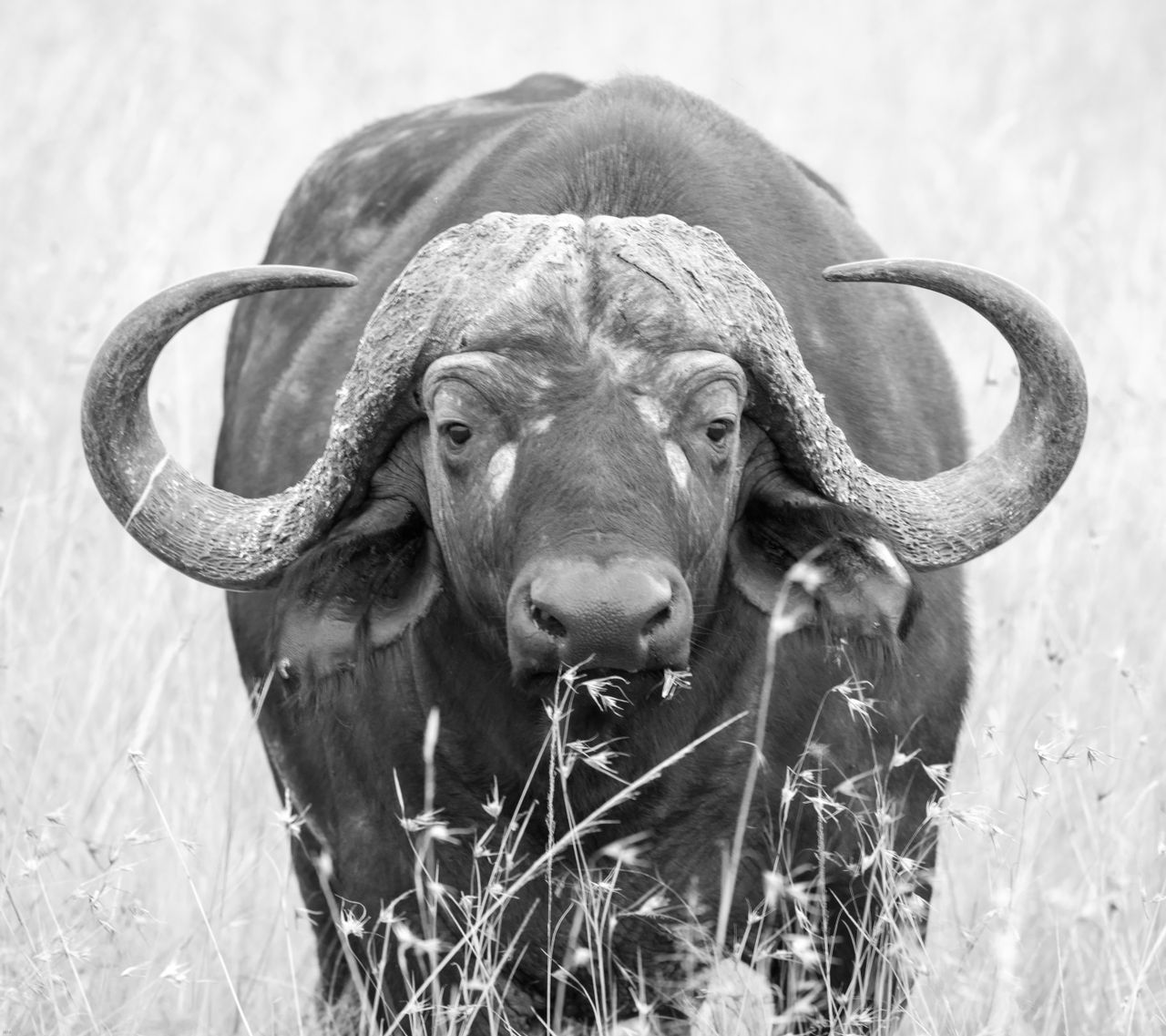
Both parks have lion, leopard, elephant, buffalo and rhino. The difference is in how it feels to find them.
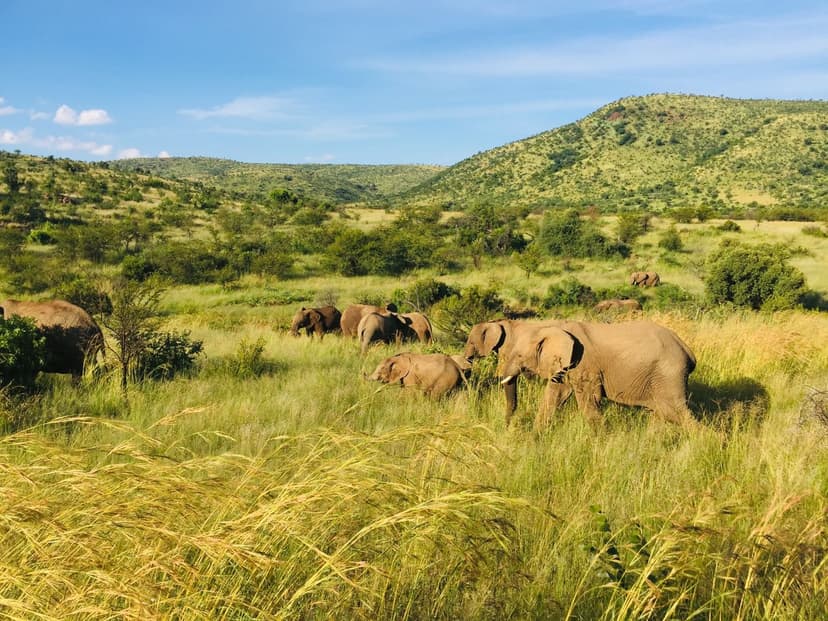
In Pilanesberg, a small park with a well-connected road network means you cover a large share of the park in a single drive. Elephants and rhino are seen often, lions are regularly found (helped by the fact that one good tip can be reached in 20 minutes), and buffalo turn up in the denser bush. Leopard is the hard one here, as it is everywhere. For the details, see our guide to the best time to see elephants, lions and leopards in Pilanesberg.
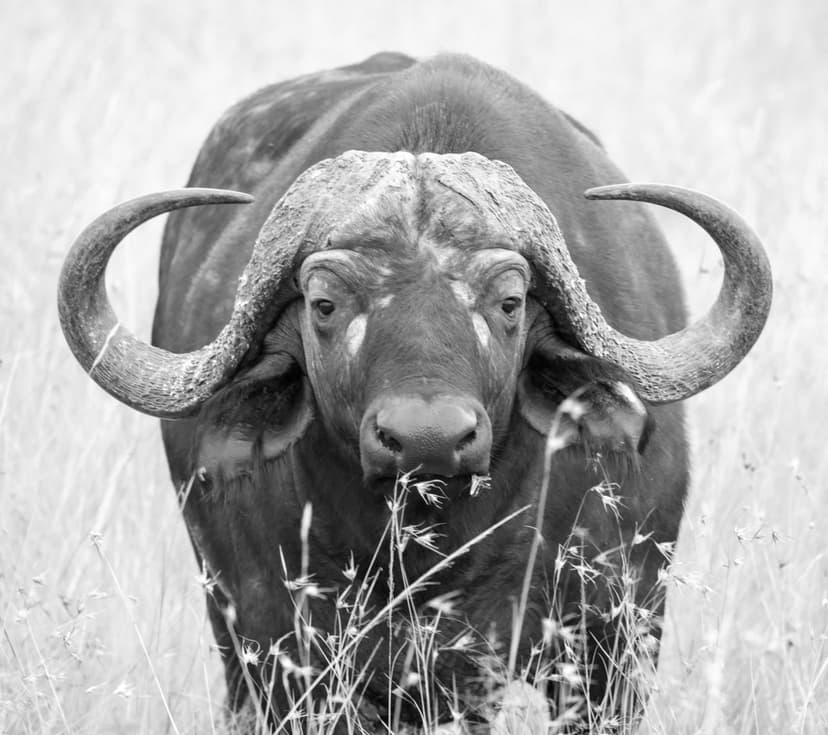
In Kruger, the numbers are on another level. The park holds tens of thousands of elephants and buffalo, well over a thousand lions, and one of the best leopard populations of any public park in Africa. The south, around Skukuza, Lower Sabie and Satara, is famous for big cat sightings. The trade-off is distance: a sighting 40 km away might as well be on the moon at 40 km/h on gravel.
Beyond the Big Five
Both parks have cheetah, a rare and exciting find in either place (see our guide to cheetahs in Kruger). For African wild dog, Kruger wins clearly: Pilanesberg's dogs haven't been confirmed in years (see our wild dog guide). Pilanesberg is, however, a good place for brown hyena, which is unusual in the Lowveld.
Kruger simply has more of everything: close to 150 mammal species, over 500 bird species, and habitats that range from riverine forest to open grassland to northern mopane. If birding or the "small five" matter to you, Kruger's variety is hard to beat.
Density vs scale
A useful way to think about it: Pilanesberg gives you more sightings per hour of driving, because there's less ground between animals. Kruger gives you more of the wild: bigger herds, longer river roads, more species and the feeling that the bush goes on forever. Neither is "better." They answer different questions.
Landscape and feel
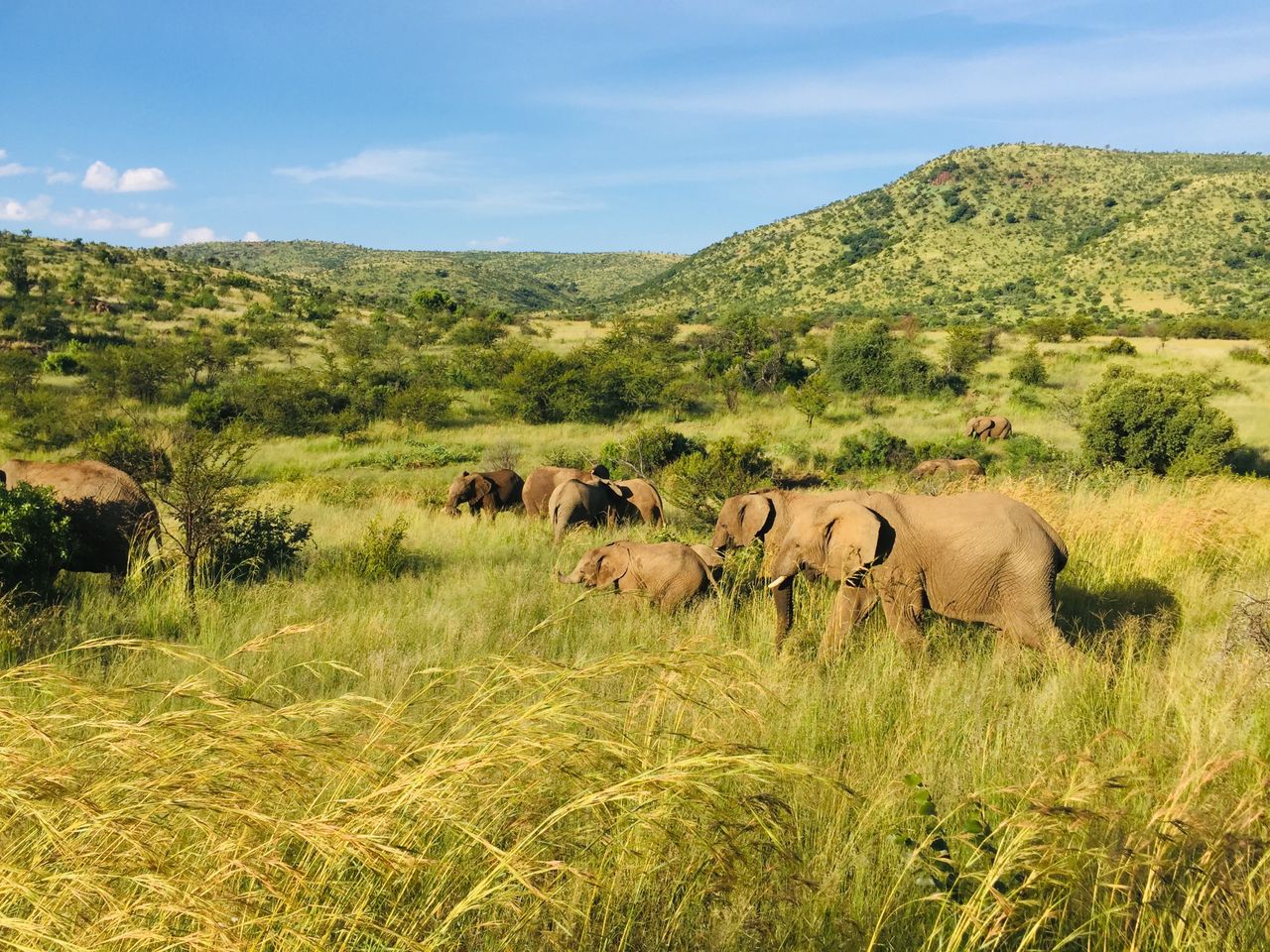
Pilanesberg is set inside the eroded crater of an ancient extinct volcano, so you're surrounded by rings of hills with a large dam, Mankwe, near the middle. The scenery is beautiful and the hills make it feel enclosed and easy to orient yourself.
Kruger is flatter Lowveld bush, cut through by big rivers (the Crocodile, Sabie, Olifants, Letaba and Luvuvhu). The scale is the point: long drives, huge skies and rest camps that feel like small villages in the middle of nowhere.
Roads and self-driving
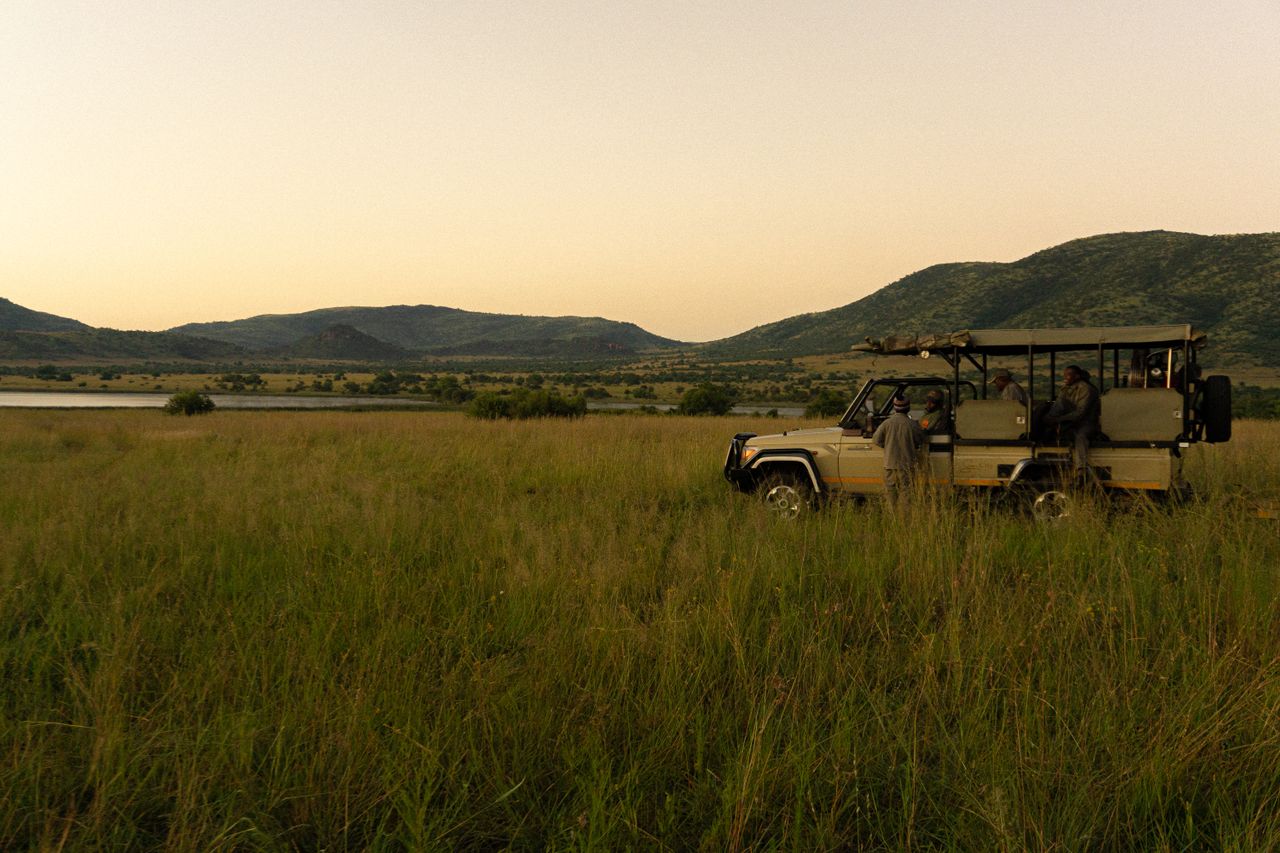
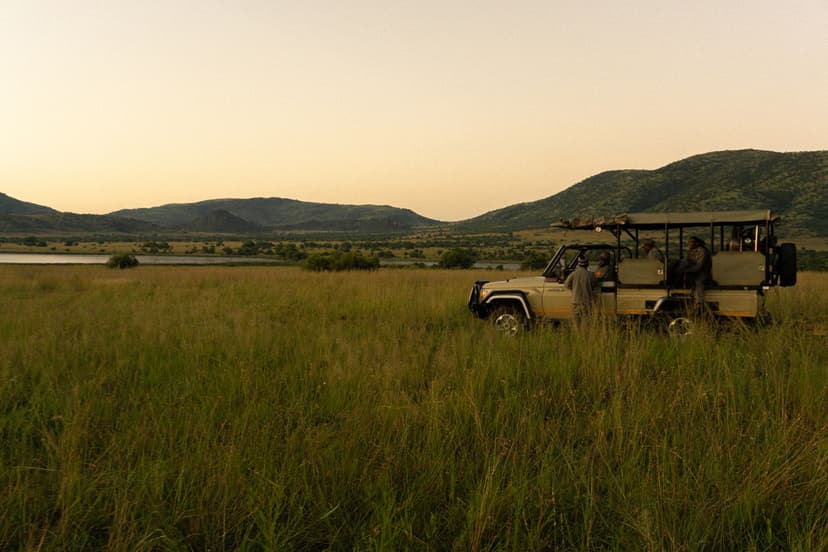
Both parks are excellent for self-drive, and neither needs a 4x4 on the main routes.
Pilanesberg has a mix of tar and gravel. A normal sedan copes on most roads in the dry season, though higher clearance helps on some gravel loops and gives you a better view over the grass. Our Pilanesberg self-drive guide covers the gates, roads and hides in detail.
Kruger has a long network of tar main roads and many more gravel side roads. The speed limit is 50 km/h on tar and 40 km/h on gravel, and it is enforced. A sedan is fine on tar and most gravel; after heavy summer rain some gravel roads close.
In both parks you must stay in your vehicle except at marked spots and in camps, and you must be through the gate before it closes. Gate times change with the seasons, so check them before you go.
If you've never self-driven a park before, read Self-Drive Game Viewing 101 first. The skills are the same in both parks.
Malaria and health
This is often the deciding factor for families.
Pilanesberg is malaria-free, which makes it the easy choice for babies, young children, pregnant travelers and anyone who can't take antimalarials.
Kruger is a malaria area. The risk is lower in the dry winter months and higher in the wet summer months, roughly November to April. Speak to a travel clinic or your doctor well before you go about whether you need prophylaxis, and use repellent, long sleeves at dusk and a net or fan at night either way.
Cost

For a short trip, Pilanesberg is usually far cheaper: less fuel, no need for multiple nights, and you can do it as a day trip with a packed lunch. Kruger's daily conservation fees per person are higher for international visitors, but South Africans pay a heavily discounted rate, and a SANParks Wild Card can make repeat visits to Kruger very affordable if you go more than once or twice a year.
Accommodation varies a lot in both. Kruger's SANParks rest camps offer everything from campsites to family cottages at reasonable prices, but popular camps book out months ahead, especially in school holidays. Pilanesberg has resort accommodation and camping inside the park and plenty of options around Sun City just outside it.
Fees change every year, so always check the current tariffs on the official SANParks and Pilanesberg sites before you budget.
Crowds
Pilanesberg's small size and closeness to Gauteng mean it gets busy, especially on weekends, public holidays and school holidays. A lion sighting near a main road can draw a long line of cars. Go midweek if you can, and be through the gate at opening time.
Kruger's south (Skukuza, Lower Sabie, Crocodile Bridge) also gets congested at good sightings in peak season. Head north of the Olifants River and the traffic drops off dramatically; on some northern roads you can drive for an hour without seeing another car.
Cell signal and staying informed
Half the fun of self-drive is knowing what's been seen and where. That's harder than it sounds once you're through the gate.
Pilanesberg has signal in places, but the hills and valleys leave plenty of dead spots. Most of Kruger has no signal at all outside the camps (more on that in No Signal in Kruger?).
This is exactly why we built opspoor to work offline. You can Log a Sighting with no signal at all: it saves on your phone and syncs automatically when you're back in range. In camp, or anywhere with a bar or two, you can check recent sightings and see what's been spotted, and which way animals were moving, before you choose your morning route.
So which one should you choose?
Choose Pilanesberg if...
You have one or two days, or want a day trip from Johannesburg or Pretoria.
You're traveling with young children, or anyone who should avoid malaria areas.
It's your first safari and you want a high chance of seeing a lot in a short time.
You're tacking a safari onto a business trip or a Sun City stay.
Choose Kruger if...
You have four days or more and want a proper safari holiday.
You want the widest variety of species, birds and landscapes.
Big cat sightings, especially leopard, are high on your list.
You want quiet roads and the feeling of real wilderness (head north).
Going with Kruger? Our month-by-month guide to the best time to visit Kruger will help you pick your dates.
Can't decide?
Do both, in that order. A weekend in Pilanesberg is the best training ground there is for Kruger: you'll learn to read the bush, spot movement and work a sighting, and you'll arrive in Kruger a much better game-spotter.
Frequently asked questions
Is Pilanesberg better than Kruger?
Not better, different. Pilanesberg is closer, smaller, malaria-free and easier to do in a day or a weekend. Kruger is vastly bigger, with more animals and species, and rewards a longer trip.
Can you see the Big Five in Pilanesberg?
Yes. Pilanesberg has lion, leopard, elephant, buffalo and rhino. Leopard is the hardest to find, as in every park.
How far is Pilanesberg from Johannesburg?
Roughly 160 km, about 2 to 2.5 hours by road depending on traffic and which gate you use.
Is Kruger worth it for just one day?
Usually not from Gauteng: you'd spend most of the day driving to and from the gate. If you only have one day, Pilanesberg is the better choice.
Is Pilanesberg malaria-free?
Yes. That's one of the main reasons families with young children choose it over Kruger.
Do I need a 4x4 for Kruger or Pilanesberg?
No. A normal car is fine on the main roads in both parks. Higher clearance helps on some gravel roads and after rain, and it gives you a better view.
Before you go
Whichever park you pick, the same few things make the difference: be at the gate when it opens, drive slowly, stop often, and know what's been seen recently. Download opspoor before you leave home, check recent sightings for Pilanesberg or Kruger while you still have signal, and Log a Sighting whenever you find something, signal or not.
Gallery